
“What’s the biggest concern when going to South Korea for medical aesthetics treatments?” After reviewing over a hundred reviews on BeautsGO, the answer became clear to me—it’s not the lack of results that worries people, but rather the fear of “no one to take care of you.” Three months ago, I visited EDITION Edition Dermatology at Gangnam Station for the first time, feeling quite anxious. Would such a large comprehensive hospital also operate on a “queue in, queue out” assembly-line model? But when Dr. Han Dae-hee personally used an iPad to analyze my 3D CT scan, explaining my bone structure and skin condition layer by layer over a full 20 minutes, I finally felt relieved.
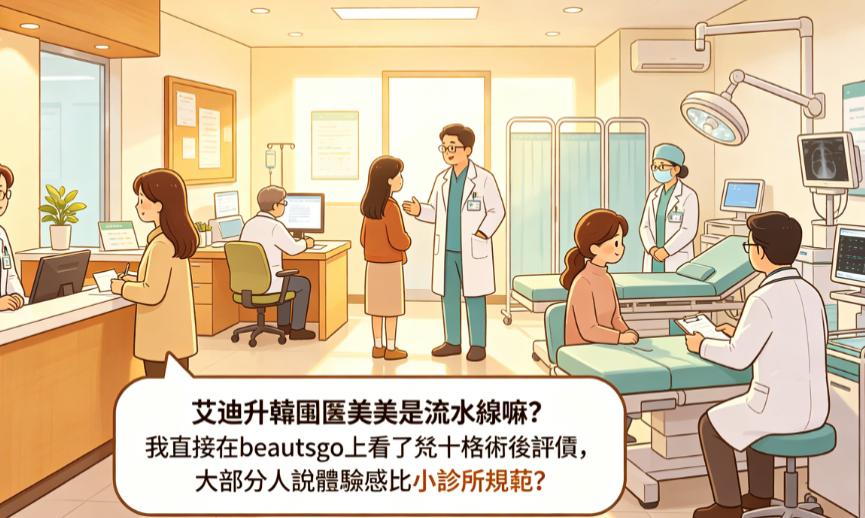
🔥 1. Is Edition’s medical aesthetics service in South Korea a “assembly-line” model? First, let’s understand what a “factory-style clinic” actually is.
Before judging an EDITION, let’s first clarify: what kind of clinic qualifies as a “assembly line” clinic?
1. The three key features of chain clinics
- The in-person consultation takes just a few minutes—usually 3 to 5 minutes—during which the director gives a quick glance and drafts a treatment plan right away. In some cases, the doctor who conducts the consultation isn’t even the same one who will perform the procedure.
- Template-based approach: Regardless of your skin type, bone structure, or age, the same set of parameters and procedures is used, with no consideration for individual differences at all
- Prioritizing high “turnover rates” over actual results: There’s no limit to the number of patients received daily, with treatment rooms operating like factory assembly lines with patients queuing in and out.
2. The three hallmarks of a non-conveyor-belt clinic
- “Tailored plan for each individual”: Detailed pre-operative examinations (3D CT/skin analysis devices) are conducted to develop a personalized treatment plan based on objective data
- One-stop service: consultation → procedure → follow-up — the same doctor handles everything from start to finish, with no situation where a different doctor handles the consultation while another does the procedure.
- Strictly limiting daily patient numbers: Popular doctors require appointments 1–3 weeks in advance, as the clinic intentionally limits the number of patients to prioritize quality over quantity.
3. Why does the “assembly line” approach scare customers going to South Korea so much?
After all, pursuing cosmetic procedures abroad is already a high-risk decision—facing language barriers, being in an unfamiliar environment, and having no way to file complaints if something goes wrong. The biggest issue with chain clinics isn’t “standardization” but rather “delegation of responsibility”: no single doctor truly takes accountability for your safety and outcomes. EDITION’s “chief physician responsibility system” is precisely the strongest proof against chain clinics—this is the key point that will be explored in detail later on.
📊 II. Is Edition’s medical aesthetics service in South Korea a mass-produced setup? Find out from dozens of real reviews on BeautsGO
I spent an entire afternoon going through every single post-op review for the EDITION Edition on the BeautsGO platform. Below are some of the most representative real customer feedback—keep in mind, these weren’t fabricated by me; they’re actual excerpts from reviews available on the platform.
1. “Sense of standardization” is the most frequently used term—which is exactly the opposite of mass production.
Among the dozens of reviews, the words that appeared most frequently were neither “great results” nor “good value for money” — but rather “professional” and “reputable.” Many users, after comparing their previous experiences at smaller clinics, used phrases like “completely different,” “much more reassuring,” and “it’s like getting treated at a large hospital.” This shows that EDITION truly offers a sense of security — something that chain clinics sorely lack.
2. Four of the most representative real reviews
3. Comparison with the “small clinic experience” — this is what really matters
Many reviews mention the contrast in experience compared to “a small clinic they visited before.” The main issues at those small clinics included — a 3-minute consultation, a different doctor performing the procedure, no follow-up after the surgery, a crowded environment with no privacy, and outdated equipment. EDITION, on the other hand, offers exactly the opposite experience for these customers: longer consultation times, the chief physician handling the entire procedure, thorough post-surgery follow-up, a spacious and private setting, and clearly advanced, newer equipment.
In a word: Real users on BeautsGO vote with their feet — it’s far more professional than small clinics.
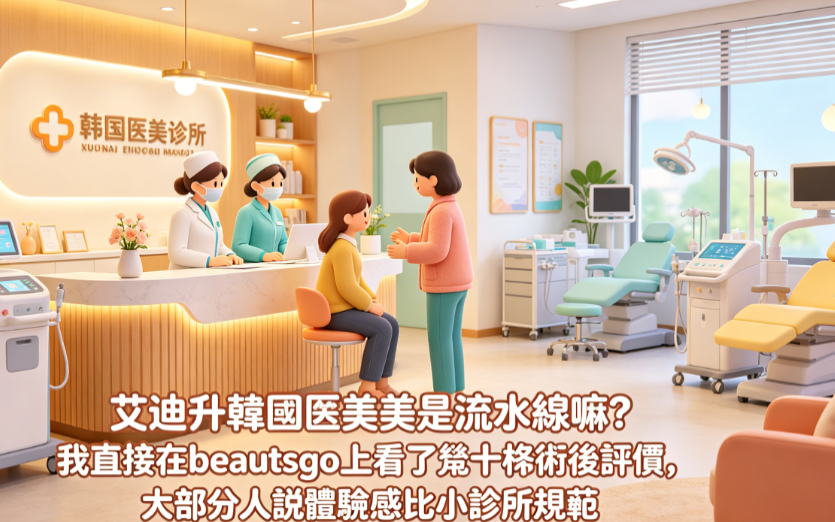
👨⚕️ III. Is Edition’s medical beauty service in South Korea a mass-production model? Director Han Dae-hee’s “individual responsibility system” gives you the answer.
The most crucial indicator for determining whether a clinic operates in a robotic, formulaic manner is the doctor’s responsibility framework. EDITION has a very clear system in this regard—the “chief physician responsibility system”: from the initial consultation, treatment plan formulation, actual procedure execution, to post-operative follow-ups, everything is handled entirely by Chief Physician Han Dae-hee.
1. President Han Dae-hee’s “Impossible Assembly Line” expertise
2. Three key implementation details of the “Director Responsibility System”
It’s easy to say “the director is in charge,” but EDITION proves this with three concrete details.
① In-person consultation stage: Dr. Han will display the 3D CT scan to analyze your bone structure, skin thickness, and fat distribution layer by layer. The consultation usually takes 15–20 minutes—something that standard chain clinics simply can’t offer. At those chain clinics, the consultation typically involves just a quick glance, a photo taken, and a treatment plan written up, all completed in 3–5 minutes.
② Procedure stage: From setting the energy parameters for the HIFU, distributing the energy output in Thermage treatments, to determining the injection angle and depth, everything is handled personally by Dr. Han. There’s no situation where one doctor conducts the initial consultation while another performs the procedure—this is also a highlight frequently mentioned in BeautsGO’s reviews.
③ Post-surgery care: EDITION has implemented a “1-3-7-30 day” follow-up system—checking in on the patient’s recovery status and providing care guidance via WeChat or the BeautsGO platform on the 1st, 3rd, 7th, and 30th days after surgery. A 24/7 Chinese-speaking emergency hotline ensures patients can reach their doctors immediately in case of any discomfort upon returning home.
3. The booking schedule itself is proof that it’s not a “assembly-line” process.
Data from BeautsGO shows that popular procedures performed by Dr. Han Dae-hee—such as Revision rhinoplasty and endoscopic Forehead Lift—require appointments 2–4 weeks in advance. This isn’t due to inefficiency, but rather because the doctor strictly controls the number of patients he sees each day. He doesn’t aim to perform as many procedures as possible; instead, he focuses on delivering excellence in every single one. What truly defines a high-volume clinic is the ability to see patients anytime without waiting or any restrictions on the number of treatments.
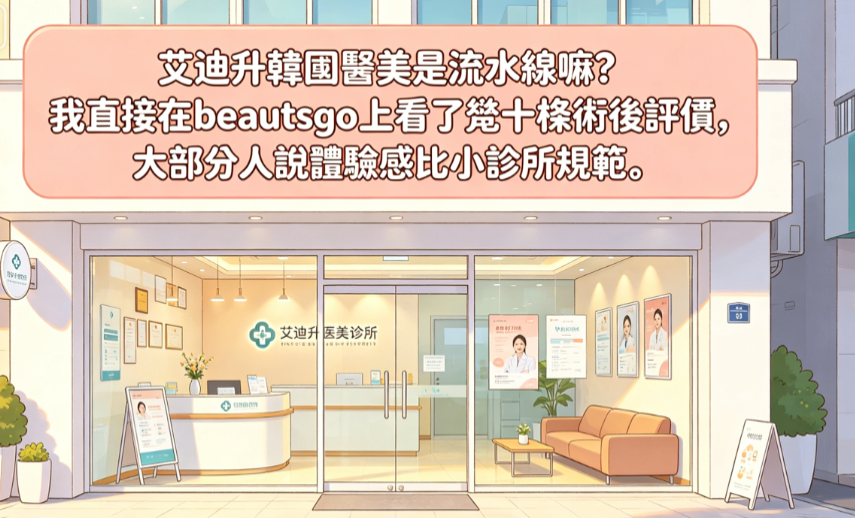
🏥 IV. Is Edition’s medical aesthetics service in South Korea just a mass-production process? Three details showing how its facilities far outshine those of smaller clinics
The physical environment is the most straightforward indicator to determine whether a clinic is legitimate. Clinic chains typically share one common feature: cramped spaces, lack of privacy, and outdated equipment. EDITION, on the other hand, offers exactly the opposite in all three aspects.
1. Space Design: Light beige natural wood style + private VIP meeting rooms
Stepping into EDITION on the 6th floor of the OPUS 407 building, your first impression isn’t that of a clinic, but rather a high-end boutique hotel. The entire floor features a light beige wood-inspired design, warm lighting, comfortable sofas, and private booths—eliminating entirely the cold atmosphere typical of conventional clinics. The waiting area is equipped with separate VIP consultation rooms, ensuring that each client has their own dedicated space for consultations and pre-surgery discussions, free from the crowded corridor scenes where people wait in line one after another.
2. Surgical-grade hardware: Class 1000 laminar flow operating room + independent anesthesia system
EDITION is equipped with Class 100 laminar flow operating rooms — a standard feature in reputable hospitals, and these rooms undergo regular inspections by the KFDA (South Korea’s Food and Drug Safety Administration). An independent anesthesia system ensures safety throughout the surgical procedure. Small clinics usually only have a basic treatment room, lacking both independent laminar flow operating rooms and anesthesia systems. Additionally, EDITION has CCTV surveillance installed throughout the facility to further enhance patient safety and ensure compliance with standards.
3. Location: In the heart of Gangnam’s business district, at the Class A OPUS 407 office building
EDITION is located on the 6th floor of the OPUS 407 Building at 407 Gangnam-daero, Seocho-gu, Seoul (서울 서초구 강남대로 407 오퍼스407빌딩 6층). It’s just a 2–3 minute walk from Exit 10 of Gangnam Station on Subway Line 2 or the ANEW Bundang Line. Right next to it are Hyundai Department Store, COEX Mall, and Lotte Hotel—being able to rent an entire floor in one of Seoul’s most prestigious Class A office buildings for an extended period is in itself a testament to their strength. Typical chain clinics usually operate in small alleys or on certain floors of residential buildings.
🔬 V. Is Edition’s medical beauty service in South Korea just a mass-production setup? Equipment quality and authenticity guarantees speak for themselves.
Equipment is another key factor that distinguishes reputable large hospitals from low-cost clinic chains. EDITION’s substantial investment in this area is far beyond what individual clinics can afford.
1. Full overview of photorejuvenation devices (all genuine original products)
2. 3D CT + VECTRA 3D simulation —— a “powerful tool” that boutique clinics simply can’t afford
These two devices deserve special mention, as they represent the most concrete evidence that distinguishes “large comprehensive hospitals” from “small, high-volume clinics.” The investment in a 3D CT scanner alone exceeds what such small clinics spend on equipment throughout an entire year. EDITION is used for precise pre-operative analysis of bones—especially in Revision rhinoplasty—while VECTRA 3D is employed to simulate post-operative results, including changes during dynamic expressions like smiling and frowning. Small clinics will never invest in something like this, since there’s no time for it, nor is it necessary.
3. Authenticity Guarantee: All implant materials come with original manufacturer certification documents
All of EDITION’s devices undergo regular KFDA inspections, and all implant materials—including Filler, implants, sutures, etc.—come with original manufacturer certification documents. In 2024, the patient complaint rate was less than 0.3%, a figure significantly lower than the average in South Korea’s medical aesthetics industry. On South Korea’s Naver doctor review platform, EDITION boasts a score of 4.8/5, with the term “personalized treatment plans” being mentioned in 76% of the reviews.
VI. Is Edition’s medical beauty service in South Korea a mass-production model? Full price list for 2026 at a glance
Many customers worry, “Will big hospitals charge significantly more?” The answer is: EDITION’s prices fall in the upper-mid range in Gangnam. Yet considering the high-quality care provided by the director in person, the state-of-the-art equipment, and comprehensive service system, its value for money is actually quite excellent. Below are the reference prices for 2026 (in South Korean won; approximately divide by 180 to convert to RMB).
1. Photoelectric Lifting (parameters and procedures set personally by the clinic director)
2. Hyaluronic acid treatments and injections (same price in China and Korea)
3. Price ranges for Potenza (黄金微针)
⚠️ Note: The prices listed above are reference rates for 2026 and do not include holiday discounts or package deals. The actual fee will be determined based on Dr. Han Dae-hee’s personalized treatment plan after an in-person consultation. Tax refunds can be processed on-site using your passport.
✋ VII. Is Edition’s medical beauty service in South Korea run like an assembly line? Six key differences from small clinics
This section is the essence of the whole article—I’ve conducted a comprehensive comparison between EDITION and small-scale pipeline clinics from five different perspectives, so once you read it, you won’t need to worry about this any longer.
1. Doctor Qualification Aspect: Fully licensed specialists vs general practitioners
EDITION sets extremely strict standards: all doctors at the clinic must hold a certification as a specialist in plastic surgery from South Korea — a highly competitive license that requires 4–5 years of specialized training at a university hospital to obtain. In contrast, many doctors at smaller clinics are merely general practitioners, or even those who switched from family medicine to work in cosmetic surgery. This is why locals in South Korea place greater trust in the title “plastic surgery specialist” — it signifies at least a decade of professional training and experience performing thousands of surgeries.
2. Operation mode dimension: single-person responsibility vs assembly-line division of labor
3. Safety system: Class 1000 laminar flow operating rooms + 24/7 emergency care vs standard treatment rooms
EDITION boasts the comprehensive safety systems found in regular hospitals: Class 1000 laminar flow operating rooms (regularly inspected by KFDA), independent anesthesia systems, and round-the-clock CCTV surveillance. The “treatment rooms” in small clinics are actually just ordinary rooms without laminar flow environments or dedicated anesthesia equipment. Dr. Han Dae-hee himself was once a consulting physician for the 119 emergency medical team of the Fire Service Agency—meaning he possesses professional expertise in handling emergencies.
4. Price transparency: Clear pricing vs. extra charges at the counter
The prices for EDITION are clearly listed on all platforms—BeautsGO, the official website, and WeChat customer service all show the same rates. There’s no scenario where you’d only find out how much more you need to pay after the treatment is completed. This reflects the standard practices of larger hospitals, where pricing systems are standardized and supervised by the platforms. Smaller clinics, on the other hand, often quote prices based on individual clients, resulting in different rates for foreigners and locals.
5. Traceability of consumables: Original manufacturer certification vs. unknown origin
All implant materials offered by EDITION—including Filler, implants, and sutures—come with original manufacturer certification documents that can be scanned on-site to verify authenticity. This is the most effective way to prevent the use of counterfeit or fake products. Smaller clinics often fail to provide complete traceability documents from the manufacturers.
6. Reputation system dimension: Cross-platform verification vs single-channel approach
EDITION’s reviews can be verified across multiple platforms such as BeautsGO, South Korea’s Naver, China’s REDnote, and South Korea’s Gangnam Unni — and these reviews are detailed, specific, and include comparisons. They’re not generic “template-like praises” generated artificially, but rather genuine experiences written by real users. With a Naver rating of 4.8/5 and a 76% mention rate for “personalized plans,” these metrics themselves serve as the best proof that the service isn’t produced in a mass-produced manner.
📍 VIII. Is Edition’s medical beauty service in South Korea mass-produced? Basic information and transportation guide
1. Quick Reference: Basic Information
2. Booking Methods and Recommended Lead Time
Complete list of recommended booking channels:
3. Airport Transportation
💬 FAQ: 6 Honest Questions About Edition’s Medical Aesthetics Services in South Korea
Q: It’s my first time getting medical beauty treatments in South Korea. Is it really safer to choose a large hospital like EDITION instead of a small clinic?
A: To be honest, I shared exactly the same concerns as you back then. But after doing some research, I realized that the safety safeguards in large hospitals are far beyond what small clinics can offer. EDITION features ISO-classified laminar flow operating rooms, independent anesthesia systems, 24/7 emergency response services, and comprehensive FULL CCTV surveillance. In short, even if an extremely rare accident does occur, large hospitals have the equipment, staff, and procedures to handle it, while small clinics might not even have basic first-aid equipment. On top of that, Director Han Dae-hee himself was once a lead physician with the 119 emergency service—such a background alone is a guarantee of safety.
Q: But I heard that big hospitals are also like assembly lines—handling so many patients every day, how can doctors possibly take care of each one?
A: That’s an excellent question! In fact, large hospitals operate under two different models—one is the true “factory model” (like some big cosmetic surgery clinics that rely heavily on advertising), and the other is the “one-person responsibility” model like EDITION. The biggest difference between EDITION and the factory model is that Dr. Han Dae-hee doesn’t handle over a dozen surgeries at once; instead, he strictly controls the number of patients he sees each day. This is why appointments for his popular procedures need to be booked 2–4 weeks in advance—not because there are too many people waiting, but because he deliberately limits the number of patients he treats daily. In his own words: “Every surgery needs to be treated with the same level of focus as the very first one.”
Q: Are the prices of EDITION expensive in Gangnam? How does it compare to prices back home?
A: To be fair, EDITION’s price falls in the upper-mid range in Gangnam—it’s not the cheapest, but it’s also not the most expensive. The key point is that for the same Thermage 5th generation treatment with 300 shots, regular hospitals in China typically charge between 15,000 and 25,000 RMB, while EDITION costs around 7,200 RMB (1,300,000 KRW). With higher quality—performed personally by Director Han Dae-hee rather than possibly non-medical staff in China—the price is only about 30%-50% of what’s charged domestically. Plus, since tax refunds are available on site, the cost-performance ratio is truly excellent. If you’re looking to save money, you could opt for chains like PPEUM in PPEUM, where prices start at 55,000 KRW for Onda, but the quality and level of care definitely fall short compared to EDITION.
Q: What if I don’t know Korean? Will communication be a big problem?
A: Don’t worry at all! EDITION has a full-time team of Chinese translators who will accompany you throughout the whole process—from scheduling appointments, consultations, and the procedure itself to post-operative guidance—all in Chinese. There’s also a fantastic extra benefit that many people aren’t aware of: if you experience any discomfort after returning home, you have a 24/7 Chinese-speaking emergency hotline to reach the on-duty doctor at any time. This kind of service is completely unavailable at regular clinics, where patients are left to fend for themselves after the procedure.
Q: Should I choose HIFU or Thermage? Can they be done on the same day?
A: Simply put—choose HIFU for sagging and Thermage for loose skin. HIFU focuses on lifting the SMAS fascia layer (deeper layers), while Thermage targets tightening the dermal layer (mid-to-shallow layers). Both treatments can be done on the same day (Thermage first, followed by HIFU), but it’s not recommended to apply them to overlapping areas at once. The best approach is to have Dr. Han Dae-hee conduct a face consultation to determine a customized treatment plan based on your facial structure and skin condition—that’s what “non-standardized” care means. EDITION’s combined package is about 20%-30% cheaper than having the treatments done separately.
Q: How do EDITION compare to DOCTORS and BAI? How should I make my choice?
A: All three of these are highly rated, boutique clinics in Gangnam that aren’t part of any chain, but they serve different target audiences.
• EDITION (Edition): A all-in-one solution that covers both plastic surgery and skin care. Director Han Dae-hee’s record of over 2,000 Revision rhinoplasty procedures serves as a testament to his expertise, making it ideal for clients seeking cosmetic enhancements or those looking to address all their concerns in one go.
• DOCTORS: Led by dual-head chief physicians specializing in Dermatology, the clinic is renowned for its HIFU and Rejuran treatments, making it an ideal choice for comprehensive skin care and photorejuvenation needs.
• BAID: A top-tier Dermatology clinic personally run by Director Nan, specializing in Pico treatments and full-face rejuvenation—perfect for clients who seek the aesthetic vision and natural results of a female director.
What these three clinics have in common: none of them use assembly-line procedures, all offer prices identical to those in Korea and China, and all can be booked through BeautsGO. You can choose the one that best fits your specific needs.
📱 Check prices online & book a consultation: Click to visit the BeautsGO platform →