

Don’t you think medical aesthetics treatments are getting more and more expensive in China?
A vial of Rejuran PN costs 5,800 yuan, while an Ulthrea treatment for the entire face starts at 15,000 yuan. The Inmode treatment for Double Chin alone already runs up to 8,000 yuan. The moment you swipe your card to pay, your wallet just cries.
But have you ever thought that for the same procedure in South Korea, the price can be more than half lower?
It’s not some promotional gimmick or a “limited-time deal” during discount seasons. This is simply the regular price in South Korea’s medical aesthetics market — Rejuran PN costs around 1,600 yuan in Gangnam, Inmode treatments for Double Chin start at about 1,500 yuan, and Ulthrea full-face treatments begin at roughly 6,300 yuan. With identical genuine devices, the same imported consumables, and even treatments performed by doctors certified by both FDA and KFDA, the prices here are only one-third to half of those in China.
Why such a big difference? It’s because the medical aesthetics industry in South Korea is a market driven by strong demand—there are over twenty Dermatology clinics alone in Gangnam, and the competition is so fierce that if you don’t lower your prices, no one will come to you. The large-scale procurement of equipment, lower costs for bulk purchases of consumables, and a different doctor compensation system compared to China all contribute to this significant price gap.
This article doesn’t just make generic claims about “cheap medical aesthetics treatments in South Korea.” Instead, it breaks down the three most worthwhile procedures to undergo there in 2026—Rejuran PN, the combination of Inmode+ HIFU for treating Double Chin, and ONDA—providing you with prices in Korean won, conversions to RMB, equivalent prices in China, as well as recommendations for top hospitals.

I. Top Recommended Medical Aesthetics Treatments in South Korea for 2026: Rejuran PN – Only 1,600 KRW in South Korea vs. 5,800 CNY at home; you can save enough for a flight ticket!
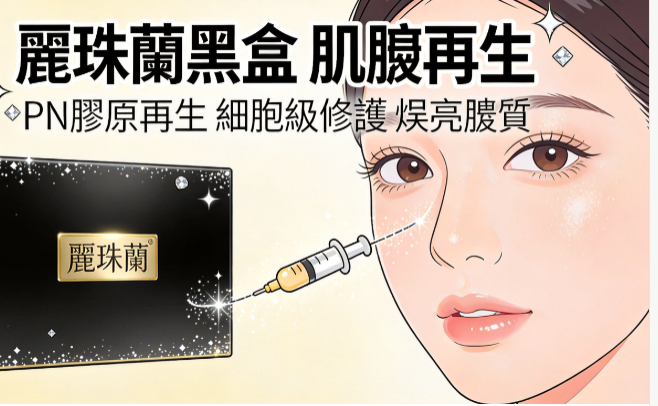
Rejuran PN is known as the “Hermès among hydrating products.” Its key ingredient is a polynucleotide (PN) extracted from salmon DNA, which helps deliver deep hydration, balance oil and water levels, and stimulate the regeneration of Collagen.
When applied to the face, it helps prevent makeup from settling, gives the Apple Zone a plumper appearance, and visibly reduces Pores.
1. Price comparison between China and South Korea — the gap is more than just a little bit
| Project | Price in South Korea (KRW) | Price in South Korea (RMB) | Prices in Mainland China (RMB) | Cheap in South Korea |
|---|---|---|---|---|
| Rejuran PN 2cc | ₩270,000~400,000 | Approximately 1,430–2,120 RMB | 2,980–6,000 RMB | About 60-75% |
| Rejuran PN 4cc Package | Starting from ₩620,000 | Around 3,900 yuan | 5,960~12,000 RMB | About 50-67% |
| IRejuran 1cc (regeneration, fine wrinkle improvement) for the eye area | ₩195,000~350,000 | Approximately 1,035–1,855 RMB | 2,500–5,000 RMB | Over 60% |
| Rejuran Blue Box 2cc | Starting from ₩500,000 | Starting from around 2,650 yuan | 4,500–8,000 RMB | Approximately 40-60% |
Recommended clinics: Gangnam Baid Hospital’s Rejuran PN treatment costs ₩270,000 (about 1,430 yuan); CHEONGDAM ANZ Dermatology’s 4cc package is priced at ₩736,000 (around 3,900 yuan), with a post-treatment calming mask included; in Busan, Jryn Seomyeon offers the lowest price at ₩100,000 (about 530 yuan), the cheapest rate across all of Korea.
2. What exactly makes Rejuran PN so great?
Rejuran isn’t just an ordinary hyaluronic acid injection. Regular hydrating injections use hyaluronic acid to replenish moisture, which returns to its original state after 2–3 weeks. Rejuran, on the other hand, uses PN polynucleotides. It doesn’t “fill” the skin with water; instead, it stimulates your own fibroblasts to get to work—producing collagen and repairing the skin barrier on their own.
This means the results aren’t at their best just one week after the treatment before fading away, but rather they start to become more noticeable in weeks 2 to 4.
3. Who is it suitable for and how often should it be done?
It’s highly suitable for those over 25 who show signs of early aging such as deepening Nasolabial Fold Correction and sagging Apple Zone, those with “desert skin” characterized by dry skin that tends to break out when wearing makeup, as well as those with “oily acne-prone skin” featuring enlarged Pores and rough texture. It’s recommended to undergo the treatment three times in a row at first, with a 4-week interval between sessions, followed by maintenance treatments every 6–12 months.
II. Top Medical Aesthetics Treatments in South Korea in 2026: Inmode+ HIFU Combined Treatment for Double Chin — Starting at 9,500 KRW in South Korea vs. Starting at 23,000 CNY in China
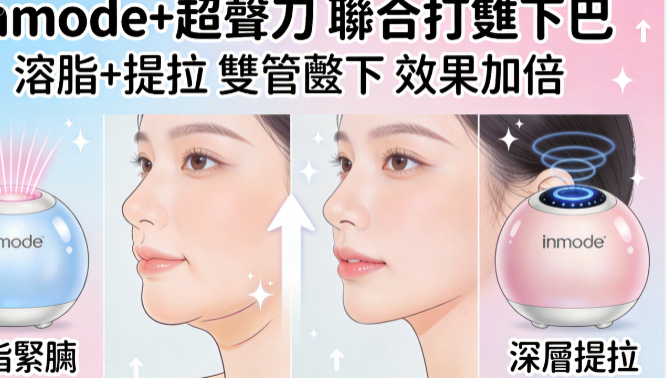
Double Chin is a real “beauty killer” for many people—even though their weight doesn’t increase, the contour of their chin becomes increasingly blurred. If you opt for Inmode fat reduction alone, the fat may disappear but the skin remains loose; if you use HIFU for lifting only, the skin tightens but the fat stays in place.
The standard treatment plan offered by doctors in South Korea involves using Inmode FX to first break down and dissolve the fat causing a Double Chin, followed by HIFU (Ultherapy) to deliver focused ultrasound waves that tighten the SMAS fascia layer. With this combined approach, the Double Chin disappears, the jawline becomes more defined, and the face appears visibly smaller.
1. Detailed breakdown and price comparison of combined treatment options
| Treatment Steps | Prices in South Korea | Domestic price | Cheap in South Korea |
|---|---|---|---|
| Inmode FX Double Chin (Single Treatment) | ₩280,000~650,000 (about 1,500~3,500 RMB) | 4,800–8,000 RMB | 60-70% |
| Ulthrea full-face treatment: 300 shots | ₩1.2 million–1.5 million (approximately 6,300–7,950 RMB) | 15,000–25,000 RMB | 55-68% |
| Korean-style HIFU full-face treatment with 300 shots | ₩220,000~350,000 (about 1,160~1,855 RMB) | 8,000–15,000 RMB | 75-85% |
| The combination of Inmode+ and Ulthrea | Starting at around ₩1.8 million (starting at about 9,500 yuan) | Around 23,000–33,000 RMB | About 60% |
| Inmode+ Combined with Korean-style HIFU | Starting from around ₩500,000 (around 2,650 yuan) | Approximately 12,800–23,000 yuan | About 75% |
2. Why does this combination deliver 1+1>2 results?
Inmode FX utilizes high-voltage electrical pulses combined with vacuum negative pressure to “suck” the fat from the Double Chin into the treatment head, where it’s precisely heated and destroyed. The entire procedure takes about 15–20 minutes. Afterward, purple-red marks similar to those seen after cupping therapy may appear and will fade over 3–7 days.
HIFU utilizes high-intensity focused ultrasound waves to penetrate the epidermis and dermis and reach the SMAS fascia layer—the very layer that is targeted in facelift surgeries. The thermal coagulation at 65–70°C stimulates collagen regeneration, with the effects of a single treatment lasting 1–2 years.
The key lies in the sequence: first reduce fat to lighten the load, then proceed with deep lifting. If you do it the other way around—lifting first and then reducing fat—the heat generated from fat reduction might interfere with the heat coagulation points already created by the HIFU, resulting in reduced effectiveness. That’s why doctors in South Korea always schedule Inmode first, followed by HIFU, performing the two treatments 7–14 days apart.
3. Recommended hospitals: Where can I find reliable combined treatment options
CLUBMIZ LAMICHE Dermatology (Gangnam): Offers combined treatment plans using Inmode+, Thermage, or HIFU, with transparent pricing. Onlif Plastic Surgery: The Inmode FX treatment for Double Chin is available at a promotional price of 100,000–150,000 won, with plastic surgeons performing the procedure based on liposuction principles. Dayone Gangnam Branch: Inmode full-face treatment starts at 200,000 won, while the second-generation Ulthrea costs 950,000 won (approximately 5,035 yuan), making it ideal for those with limited budgets but who still desire top-quality American-style treatments.
III. Top Medical Aesthetics Treatments in South Korea in 2026: ONDA Hypermicrowave – Pain-free fat melting and skin tightening in one treatment, starting at 1,500 KRW in South Korea
If you’re too afraid of pain to get an HIFU treatment and hate the purple-red marks left by Inmode for looking too embarrassing—ONDA is exactly what you need.
ONDA is a microwave fat-dissolving and tightening device developed by Italy’s DEKA company. After receiving approval from China’s NMPA in 2025, it quickly gained popularity across the country, with the cost for a full-face treatment ranging from 5,000 to 12,000 yuan. In South Korea, however, the same original equipment costs only one-third to half of that amount.
1. Complete price comparison of ONDA in China and South Korea
| Treatment Specifications | Price in South Korea (KRW) | Price in South Korea (RMB) | Prices in Mainland China (RMB) | Cheap in South Korea |
|---|---|---|---|---|
| Base: 40kJ (Areas: Double Chin/Chin Line) | ₩280,000~450,000 | Around 1,500–2,400 RMB | 3,000–5,000 RMB | About 50% |
| Full face 60kJ (standard lifting) | ₩400,000~650,000 | Approximately 2,100–3,500 yuan | 5,000–8,000 RMB | About 55-60% |
| Full face + neck 80kJ (intensive) | ₩550,000~850,000 | Approximately 2,900–4,600 RMB | 8,000–12,000 RMB | Over 60% |
| 3-Session Package (Full Face) | ₩1.1 million~1.6 million | Approximately 5,900–8,600 RMB | 15,000–24,000 RMB | About 60% |
2. Why is ONDA both painless and effective?
ONDA’s core technology relies on microwaves—not radio frequencies or ultrasound. It features a dual-probe design: a 3mm shallow probe targets the dermal layer to tighten it, while a 7mm deep probe is used for fat dissolution. Equipped with an integrated cooling system, the treatment head begins cooling as soon as it touches the skin, ensuring a mild warmth throughout the treatment process—no anesthesia is required.
The pain level is only about 20% that of Thermage—where Thermage causes a stinging sensation similar to having an eraser pressed against the face, ONDA delivers a warm feeling akin to applying a heating pad to the skin.
You can see about 50% tightening effect right after the treatment (as collagen fibers contract when heated). After 2–4 weeks, fat begins to metabolize, making the contours clearer. The results can last for 1–2 years after 3 sessions.
3. Who is it suitable for? Which clinic is recommended?
The top alternative for those who are afraid of pain; ideal for people with sagging cheeks and a noticeable Double Chin but who don’t want surgery; suitable for those whose faces have sagged due to excessive filler and need “reduction” treatment; perfect for office workers/students who want regular anti-aging care.
Recommended clinics: Kellya Dermatology (in-person treatment at 60kJ for ₩800,000, around 4,240 yuan, offering both lifting effects and skin brightening); Giveme Clinic (60kJ for ₩650,000, about 3,445 yuan, 20% cheaper than the average price in Gangnam); REPIC Dermatology (standardized procedures and MarkVu testing, ideal for beginners).
IV. Top Medical Aesthetics Treatments in South Korea in 2026: Why Are Prices in South Korea More Than Half Lower Than at Home? Let’s Break Down These Four Factors
Many people believe that “you can’t get good quality at a low price,” and their first reaction upon seeing the prices of medical beauty services in South Korea is disbelief. But after taking a look at these four cost breakdowns, you’ll realize that it’s not due to shoddy workmanship—it’s determined by the market structure.
1. Market competition drives price transparency
In a single street in Gangnam, Seoul, there are over twenty Dermatology clinics packed side by side—so dense that it’s almost like a chain of convenience stores. If one clinic doesn’t display prices while its neighbor does, customers will head over to the one with pricing listed. This kind of competitive pressure driven by customer choices has forced Dermatology clinics in South Korea to publish their prices on official websites and booking platforms, leaving no room for the tactic of giving quotes only upon arrival.
2. Large volume purchases of consumables result in lower bulk pricing
The medical aesthetics market in South Korea is valued at around $12 billion. Dermatology chain brands typically have more than a dozen to twenty outlets, and their equipment purchases amount to several times or even dozens of times that of domestic markets. Injectables like Rejuran and Juvelook cost less to produce in South Korea compared to their imported prices in the Chinese market. Without the additional costs associated with international shipping and tariffs, the final retail price remains lower.
3. Different salary structures for doctors
In South Korea, Dermatology doctors typically earn a salary combined with performance-based bonuses, rather than relying on high commissions from individual procedures. In many local medical aesthetics clinics, however, doctors’ incomes depend heavily on procedure-based payouts—30-50% commission per surgery is common—and these costs are ultimately passed on to consumers.
4. The exchange rate advantage continues to widen the price gap
By 2026, the exchange rate of the South Korean won against the Chinese yuan is expected to remain around 1:0.0053, indicating continued weakness in the won. The purchasing power of the yuan in South Korea is at a historic high—spending the same amount of money equates to getting an effective discount of 15% when converted into yuan.

V. Top Medical Aesthetics Trends in South Korea in 2026: 5 Things You Must Know Before Going There
1. US version vs Korean version — Don’t spend money on the US version just to get a Korean version machine
This is one of the most common pitfalls patients encounter when seeking cosmetic treatments in South Korea. Take the HIFU treatment as an example: the American version (Ultherapy) is an FDA-approved original device, with each probe being individually sealed and scannable for verification. The effects last for 1–2 years, and the cost for a full-face treatment starts at 1.2 million won for 300 shots. The South Korean version (such as Shurink) is produced by local manufacturers in South Korea. Although its working principle is similar, its energy parameters and clinical data are not as well-established as those of the American version, with prices starting at 220,000 won for 300 shots.
The price difference between the U.S. version and the Korean version can be as much as 5 to 10 times. Some clinics hide information about the version and don’t clarify it when giving a quote, leaving customers to discover that it’s actually Korean-made equipment only upon arrival. Be sure to confirm clearly at the time of booking: “Is it the U.S. version or the Korean version? Can I scan the probe in person to verify it?”
2. Price comparison across cities — Some procedures in Busan are 60%+ cheaper than those in Gangnam
Gangnam is considered the “cosmic center” of medical aesthetics in South Korea, but it’s also the area with the highest prices. At JR YN Seomyeon in Busan, the Rejuran PN costs only ₩100,000 (about 530 yuan), while at Baid Hospital in Gangnam, the price rises to ₩270,000 (about 1,430 yuan), representing a price difference of nearly three times.
If you have enough time in South Korea (5 days or more), you might consider visiting both Seoul and Busan. You can undergo procedures that require advanced equipment in Seoul, such as the Ulthrea and Thermage, while having injection-based treatments in Busan, like Rejuran and hyaluronic acid injections. This approach can help you save an additional 20-30%.
3. Don’t forget to claim your tax refund — international tourists can save an additional 7-8%
Those holding a tourist visa (B-1/B-2) can claim tax refunds in South Korea as long as their spending reaches ₩30,000. The tax refund rate for medical beauty treatments is around 7-8%. Here’s how it works: The clinic issues a tax refund form → You present this form along with your passport at the airport refund counter → You can choose to receive the refund in cash or by credit card. Some clinics, such as Imageup Dermatology, offer “instant tax refunds,” deducting the tax amount directly at the time of treatment, thus saving you the hassle of waiting in line at the airport.
4. Set aside extra funds — VAT and anesthesia fees are not included in the quote
Clinics in South Korea usually don’t include 10% value-added tax (VAT) in their quotes. If your treatment requires sedation (such as a combined HIFU and Inmode therapy over a large area), an additional anesthesia fee of around ₩100,000 to 200,000 (approximately $530 to $1,060) will apply. To determine your total budget, multiply the quoted price by 1.1 and add the potential anesthesia cost—this will give you your actual outlay.
5. Book 1–2 weeks in advance — popular doctors don’t wait around
At the popular Dermatology clinics in Gangnam—Lumiin, DAN-A in Myeongdong, and Baid Hospital—it’s necessary to make appointments 1–2 weeks in advance during peak seasons, as there are hardly any slots available if you show up last minute. When booking through BeautsGO, you usually receive an official confirmation from the clinic within 24 hours, along with an automatic reminder sent the day before your appointment.
VI. Top Medical Aesthetics Treatments in South Korea in 2026: Three Popular Package Options – Choose the Most Cost-Effective Combination Based on Your Budget
| Budget range | Recommended Combo | Total Price in South Korea (RMB) | Domestic Equivalent (RMB) | Save big money |
|---|---|---|---|---|
| 💰 Best value option (<8,000 RMB) | Rejuran PN 2 centum core + Korean version HIFU, 300 shots | Approximately 2,600–4,000 yuan | Around 11,000 to 21,000 yuan | Save 75%+ |
| 💎 Mid-to-high-end option (8,000–20,000 RMB) | Rejuran PN 2cc + Inmode for Double Chin + Onda Full Face Treatment at 60kJ | Around 5,000 to 8,000 yuan | Approximately 12,800–19,000 RMB | Save 55%+ |
| 👑 The Ultimate Choice (20,000 RMB+) | Rejuran PN 4 centum core + Inmode for Double Chin + Ulthrea full-face treatment with 300 shots + Onda full-face treatment at 60kJ | Approximately 12,000 to 18,000 yuan | Approximately 30,000 to 55,000 yuan | Save 60%+ |
The top-tier package costs no less than 30,000 yuan in China, but you can get it for around 15,000 won in South Korea—those extra 15,000 won is more than enough to cover round-trip flight tickets, 4 nights of hotel stay, and meals featuring Korean beef for a week.
VII. 6 Questions Top Concerning for Customers (2026 South Korea Cosmetic Surgery FAQ)
Q1: I don’t speak Korean. How can I communicate when getting cosmetic procedures in South Korea?
A: There’s absolutely no need to worry. Most Dermatology clinics in Gangnam have Chinese-speaking directors or translators. Popular clinics like Lumiin, DAN-A in Myeongdong, and Baid Hospital offer full Chinese service throughout the process—from check-in to consultations to aftercare. If a clinic doesn’t provide Chinese support, BeautsGO can arrange online translation assistance. So language isn’t an issue at all—you just need to get your skin ready.
Q2: Is it really true that getting Rejuran PN treatment in South Korea only costs 1,500 yuan? Is its effect the same as that of the 5,800-yuan version available in China?
A: Not only do they offer the same results, but genuine products are also more likely to come with better quality assurance. Rejuran in South Korea is a locally produced brand (developed by Pharma Research), so there’s no issue with “counterfeits” or “mixed batches” in the versions sold there—every Rejuran injection given at a Dermatology clinic in South Korea is an authentic product purchased directly from the manufacturer, and its authenticity can be verified by scanning a QR code. With the same PN polynucleotide ingredients and administered by dermatologists just like before, the outcomes remain exactly the same. The lower price isn’t due to cutbacks in quality, but rather because there are no international shipping costs, import tariffs, or markups from multiple intermediaries.
Q3: Which is better for treating a Double Chin—Inmode or ONDA?
A: It depends on the type of your Double Chin. If it’s mainly caused by fat accumulation (the area feels soft when pinched, and the Double Chin becomes visible when you lower your head), Inmode FX is a good choice, as it provides more direct fat reduction results, though purple or reddish marks may appear for 3–7 days after the treatment. If skin laxity is the main issue (the jawline appears blurred even without lowering your head, and the skin seems loose with little firm tissue when pinched), ONDA is the better option, offering excellent tightening effects without any recovery period. If both conditions are present, the ideal approach is to combine Inmode FX with HIFU—first breaking down the fat and then lifting the skin, solving both problems in one session. It’s recommended to consult a doctor for an in-person assessment before making a decision.
Q4: How much time does it take in total to complete these three procedures? How many trips to South Korea are required?
A:Take the cost-effective package (Rejuran PN + Inmode + ONDA) as an example—the three treatments can be completed within 2 days: on the first day, Rejuran injections (30 minutes) and Inmode treatment for Double Chin (20 minutes); on the second day, ONDA treatment for the entire face (40 minutes). The total treatment time is less than 2 hours. However, the Inmode + HIFU combination requires two sessions spaced 7–14 days apart, meaning you either need to stay in South Korea for an extra week or make two separate trips. So if you only have 3–4 days available, it’s recommended to choose the Inmode + ONDA combo to avoid waiting between sessions.
Q5: What exactly are the differences between the Korean version of HIFU and the American version? Is it worth paying more for the American version?
A: The differences lie in three aspects. First is certification: the U.S. version of Ultherapy has been approved by both the FDA in the U.S. and NMPA in China, while the South Korea version only holds approval from KFDA. Second is energy precision: the U.S. version features real-time ultrasound guidance, allowing doctors to see exactly which layer of the skin the ultrasound waves are targeting; most South Korea versions lack this real-time imaging capability. Third is duration of effects: the U.S. version can provide results that last 1–2 years, whereas the South Korea version lasts around 6–12 months. If you have enough budget and are aiming for maximum results, going with the U.S. version will definitely not disappoint. If you just want to experience the Lifting effect of HIFU but have a limited budget, the South Korea version is still a great option, costing as little as 1/5—or even less—of the U.S. version.
Q6: After getting cosmetic procedures in South Korea, how should I maintain the results once I return to my home country?
A: Within 3 days after the Rejuran treatment, it’s important to avoid wearing makeup and using saunas, while also making sure to keep the skin hydrated and protected from sunlight. For the Inmode procedure, the purple-red discoloration will fade over 3–7 days, during which time you can go out wearing a mask. ONDA virtually requires no recovery period—you can apply makeup right after the treatment. Hospitals in South Korea usually follow up via WeChat or KaKaoTalk on the 3rd and 7th days after the procedure. It’s recommended to prepare medical repair masks and sunscreen in advance before traveling to South Korea, so you can use them right after the treatment.
VIII. Top Recommendations for Medical Aesthetics in South Korea in 2026: Final Summary — Who Is Suitable for These Three Procedures in South Korea, and Who Should Avoid Them
✅ Ideal candidates for a trip to Korea
- Planning to have 2 or more procedures with a total cost exceeding 10,000 yuan—the surplus is more than enough to cover flight and accommodation expenses.
- Afraid of pain but still want anti-aging and firming treatments? ONDA is the perfect solution—its discomfort level is only 20% that of Thermage.
- Those who are price-sensitive and look for great value—since it’s still genuine product, South Korea can save them a significant amount of money.
- Planning a trip to South Korea? Take the opportunity to get cosmetic treatments too—kill two birds with one stone.
❌ Situations where it’s not highly recommended to get the procedure in South Korea
- I just want to do a small project with a cost under 2,000 yuan—so I can save enough money for the flight ticket.
- Treatments that require multiple round-trips but only allow one flight—such as certain laser therapies
- Those with extremely high demands for immediate post-surgery follow-up and who cannot accept remote check-ins
By 2026, South Korea will still offer outstanding value when it comes to medical aesthetics treatments. Procedures such as Rejuran PN, the Inmode HIFU combination therapy for Double Chin, and ONDA are at least half cheaper in South Korea compared to domestic prices. The savings can even cover two trips to Seoul—why not take the opportunity to beautify yourself while you’re there?
Visit BeautsGO to check current prices, find reliable doctors, and avoid pitfalls when getting medical beauty treatments in Korea.