
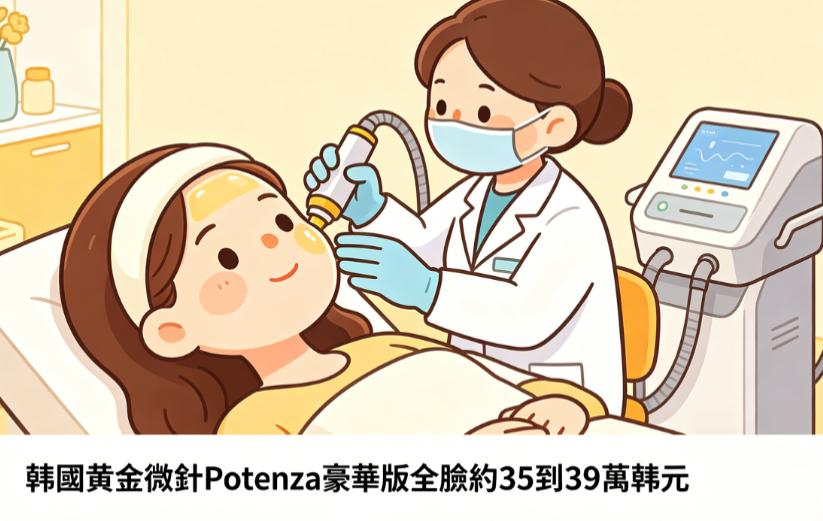
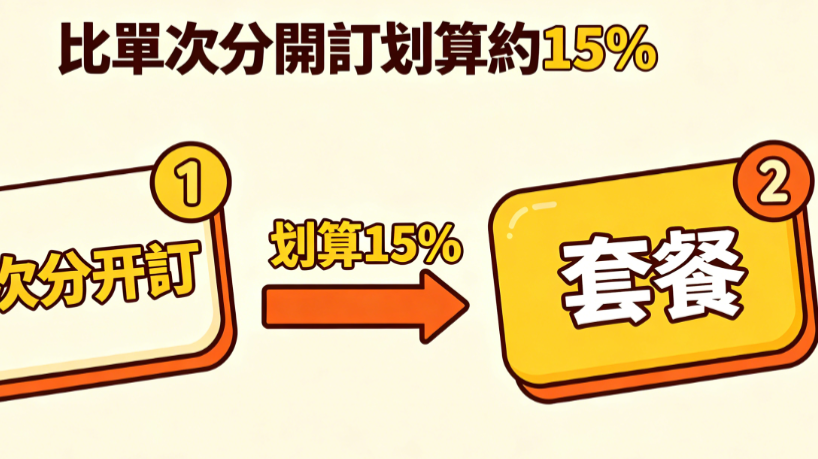
How much does it really cost to get a Potenza treatment in South Korea? If you’re currently spending between 4,000 and 8,000 RMB for a full-face Potenza treatment back home, this article might shock you—because at Gangnam Dermatology in Seoul, South Korea, the premium full-face Potenza treatment costs only 350,000 to 390,000 KRW (around 1,890–2,100 RMB), which is less than half of the price at home! Even better, if you combine the Potenza treatment with an HIFU session, the package price is 880,000 KRW (about 4,750 RMB), saving you around 15% compared to booking them separately. In other words, with just one trip to South Korea, you can get both the Potenza treatment and HIFU for the amount you’d spend on a single treatment back home, leaving you some extra money for shopping. Today, we’ll take a closer look at the actual prices, available package deals, reliable clinics, and tips to avoid pitfalls when getting Potenza treatments in South Korea, so you can decide whether this medical beauty trip is worth it.
I. What is South Korea’s popular Potenza? 🔥 Understand its core technology and probe configuration in just one article
1. Potenza isn’t just an ordinary microneedle—it’s the top-tier version of “RF microneedles.”
Developed originally by South Korea’s MONTMEDICAL, Potenza has received approval from both the U.S. FDA and South Korea’s KFDA. Its working principle involves using ultra-fine gold-coated microneedles that penetrate the dermal layer at a depth adjustable between 0.5–3.5 mm, while simultaneously delivering dual-frequency RF energy at 1MHz and 2MHz to precisely heat the dermal layer and stimulate the production of large amounts of new Collagen and elastic fibers. Unlike traditional roller microneedles that rely solely on physical stimulation, Potenza’s RF heat energy can directly “sew” together loose collagen fibers, resulting in more lasting and deeper effects.
2. Five different probes address various skin types, offering a tailored approach rather than a one-size-fits-all treatment
The Potenza comes standard with five different treatment tips, allowing doctors to select the most suitable one based on each individual’s skin type and specific concerns. The N-25 non-insulated tip (25 needles) is ideal for those with enlarged Pores and oily skin; the I-25 insulated tip (25 needles) targets acne scars and helps with Lifting. The CP-25 Pumping Tip can be used in combination with regenerative injectables such as Rejuran/Juvelook/Asce+ Exosomes. The One Tip single-needle probe is perfect for fine areas like eye wrinkles, while the Diamond Tip needle-free probe provides treatment for sensitive skin without causing any skin damage. What truly makes this version luxurious isn’t just the use of top-quality tips, but also the fact that the clinic director adjusts energy parameters tailored to different zones—T-zone, U-zone, and eye area—to deliver customized treatments suitable for every patient.
3. What are the differences between Potenza and domestically produced gold micro-needles?
Most domestically produced Potenza devices use single-frequency radiofrequency, which has limited energy penetration depth and relatively limited treatment options. In contrast, Potenza’s dual-frequency radiofrequency system (1MHz for deep dermal tightening and 2MHz for superficial epidermal improvement) allows for simultaneous treatment of both deep dermal concerns and surface skin issues. What’s more, Potenza’s probes are disposable, original equipment designed with anti-counterfeiting tracking codes for each unit, effectively eliminating the risk of cross-infection from reusing them. This is also why reputable Dermatology clinics in South Korea, despite offering lower prices for Potenza treatments, still invest fully in high-quality probes without cutting any costs.
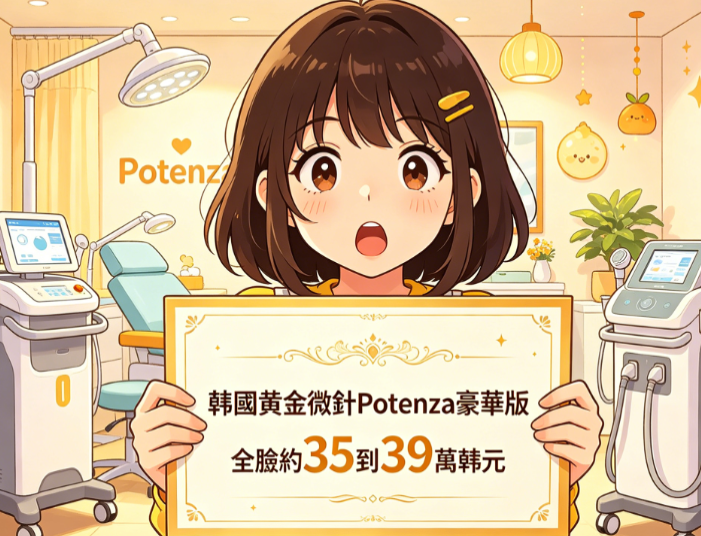
II. Actual Price Breakdown of the Premium Version Potenza Full-Face Treatment in South Korea 💸 What’s Included in the 350,000–390,000 KRW Fee?
1. Definition of “Premium Version”: It’s not the cheapest option
The basic version of Potenza available on the market, priced at 330,000 won, typically includes only full-face treatment using the standard N-25 probe, without medication delivery or post-procedure recovery services. In contrast, the premium version, costing between 350,000 and 390,000 won, comes standard with a CP-25 Pumping Tip delivery probe (disposable, original brand), Juvelook or Rejuran in a 2cc dosage for delivery, pre-procedure anesthetic cream, post-procedure regeneration laser therapy, and a cooling soothing mask. In other words, the extra few tens of thousands of won spent on the premium version translates into doubled effectiveness from medication delivery along with comprehensive post-procedure care.
2. Side-by-side comparison of Potenza packages across different price ranges
| Package Types | Price (KRW) | With probe | Includes introduction | Ideal for |
|---|---|---|---|---|
| Basic Version | Around 330,000 | N-25 | None | First-time experience, mild Pores issue |
| Standard Version | Around 350,000–360,000 | N-25/I-25 | Essential Serum | Moderate Pores + Skin Texture Improvement |
| Luxury Edition | Around 380,000–390,000 | CP-25 Pumping Technique | Juvelook 2cc Version | Pores + Acne Scars + Anti-aging |
| Top-tier version | Around 440,000–550,000 | CP-25 Pumping Technique | PDRN/Juvelook | Deep Regeneration + Acne Scar Repair |
3. Actual cost after converting to RMB
Taking the premium version priced at 390,000 South Korean won as an example, and based on the current exchange rate of 10,000 South Korean won ≈ 54 RMB, this amounts to around 2,106 RMB. In contrast, the price for a single full-face treatment using the original Potenza product in China typically ranges from 3,000 to 8,000 RMB, meaning the premium version available in South Korea costs only 26% to 70% of that price. Adding round-trip flight costs (around 1,500 RMB during off-season), it’s possible to recoup the flight expenses after just 2–3 treatments.

III. Package deal in South Korea: Potenza + HIFU for 880,000💰 – It’s definitely more cost-effective than ordering them separately.
1. Package breakdown: Price comparison between single treatments and packages
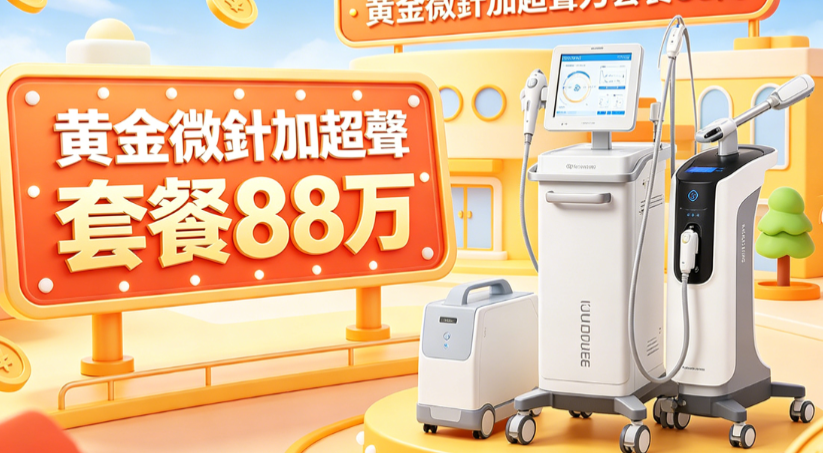
If booked separately, the premium version of Potenza for the entire face costs around 390,000 KRW, while Ulthrea Prime with 300 shots costs about 1,089,000 KRW — totaling roughly 1,479,000 KRW. However, by choosing the package deal, the Potenza treatment combined with HIFU only costs 880,000 KRW, saving you approximately 599,000 KRW (about 3,230 RMB), which represents a stunning 40% discount! This is exactly why many locals in South Korea opt for the package deal — booking them individually simply isn’t cost-effective.
| How to Make an Appointment | Portfolio of Projects | Total Price (KRW) | Approximately RMB |
|---|---|---|---|
| Book separately | Potenza Premium Edition + 300 shots of HIFU | Approximately 1.479 million | Around 7,980 yuan |
| Package Deal | Potenza + HIFU Combined Treatment Package | 880,000 | Approximately 4,750 yuan |
| Savings amount | — | Around 599,000 | Around 3,230 yuan |
2. Why is the package so much cheaper?
The pricing logic in South Korea’s Dermatology clinics differs from that in China. In China, many clinics charge based on the price per service, meaning the more procedures one undergoes, the higher the total cost. However, in South Korea’s highly competitive Dermatology market, package deals are a common strategy to attract customers: they use an “exclusive package price” to lure clients in, then encourage them to try additional services through follow-ups and word of mouth. Additionally, performing two procedures during the same visit allows for shared costs such as anesthesia, disinfection, and post-operative care, reducing the clinic’s operational expenses. As a result, clinics are more willing to offer discounts to their patients.
3. Synergistic package effects: An anti-aging combination where 1+1>2
Potenza targets Pores, acne scars, and improving skin texture, while HIFU focuses on lifting the SMAS fascia layer and tightening facial contours. These two treatments operate at different levels of the skin—Potenza stimulates collagen production in the dermal layer, whereas HIFU delivers deep-level lifting to the fascia layer. Instead of conflicting with each other, they actually complement one another. After completing the combined treatment, you’ll notice not only finer Pores and brighter skin but also a tighter jawline and lifted Apple Zone, representing true “multi-layered anti-aging” effects.
IV. Why Are Potenza Treatments in South Korea So Affordable?🏥 The Truth Behind the Price Difference Between South Korea and Other Countries
1. The equipment is sourced from its country of origin, so there are no extra markups at each stage.
Potenza is manufactured by MONTMEDICAL in South Korea. Dermatology clinics in South Korea can purchase these devices at prices that are at least 30-40% lower than those offered by overseas distributors. For genuine Potenza products in China, they must go through a four-tier distribution chain: from the South Korean manufacturer → the Chinese general distributor → provincial agents → the end-users, with each tier adding a price increase of 15-30%. In contrast, South Korean dermatology clinics buy directly from the manufacturer, eliminating all intermediate steps. By the same logic, the cost of probes and other consumables when purchased in their country of origin is much lower, which is exactly why South Korea can offer a package deal of “350,000 yuan for a full-face treatment including probes.”
2. Market density drives prices: Over 50 Dermatology clinics per square kilometer in Gangnam District
Gangnam District in Seoul has the highest concentration of medical aesthetics clinics in the world—just in Apgujeong-dong alone, there are over 200 legitimate Dermatology practices. With such intense competition, price transparency and bundled service packages have become an inevitable trend. Any clinic that dares to charge too much will see customers head to its neighbor right away. While other top-tier cities in China also boast a large number of medical aesthetics facilities, the availability of genuine Potenza equipment is relatively limited, resulting in steady high prices due to supply falling short of demand.
3. No “consultant commission” or “channel fee”
In South Korea’s Dermatology sector, the pricing process involves the chief physician conducting a direct consultation, formulating a treatment plan, and then providing a quote—without any intermediary steps such as sales by consultants or aesthetic designers, nor any commissions involved. In contrast, in China, consultants at many large medical aesthetics clinics take 15–30% of the treatment cost as commission, while hospitals acting as referral sources can charge as much as 50%. By eliminating these intermediate costs, South Korea is able to keep actual treatment prices significantly lower. This is also why it’s possible in South Korea for the price listed on the official website to be exactly the same as the price at the clinic, with no hidden fees.

V. Where to Get Potenza Treatment in South Korea?🏨 A Guide to Reputable Dermatology Centers in Gangnam and Myeongdong
1. Screening criteria: All four key metrics are mandatory
Equipment Certification: The devices must carry the original “MONTMEDICAL” logo, and the probes come with anti-counterfeiting tracking codes that can be verified on-site upon unboxing. Physician Qualifications: Dermatology specialists (not just general aesthetic practitioners) are given priority; it’s possible to request to see their medical licenses, with experience in using the Potenza device ideally exceeding 3,000 cases. Transparent Pricing: Clear pricing is displayed on the official website or app, without any hidden fees, with identical rates for customers from China and South Korea. Chinese Language Support: Chinese translators or customer service are available to prevent misunderstandings that could lead to discrepancies in treatment plans.
2. Recommended directions in Gangnam District (high-end positioning + advanced technical expertise)
The Dermatology clinics in the Apgujeong/Cheongdam area of Gangnam are equipped with the latest technology and staffed by doctors with the most extensive experience. Most of them have performed over 5,000 Potenza treatments. Notable clinics include ELEV Dermatology in Cheongdam (full-face Potenza treatment priced at around 340,000–380,000 KRW), Abijou Dermatology (PDRN Potenza starting at 440,000 KRW, Juvelook Potenza starting at 550,000 KRW), and UH CELL Dermatology (with a well-designed Korean website, located in the heart of Gangnam). The advantage of Gangnam’s clinics lies in their advanced technical skills and rapid update of equipment, though it requires some proficiency in Korean or English for communication.
3. Recommended areas in Myeongdong/Hongdae (great value for money + friendly to Chinese speakers)
At Reberry Dermatology in Myeongdong, the initial pricing for Potenza treatment is 249,000 KRW, while the Pores treatment package costs 490,000 KRW (including Juvelook therapy and regenerative laser treatment). Led by Dr. Baek Seung-jae, who has performed over 6,000 such procedures himself, the clinic accepts Alipay and WeChat Pay. It’s just a 2-minute walk from Exit 8 of the Myeongdong Station. Kleam Dermatology and Made u Dermatology in Hongdae also enjoy excellent reputations for their Potenza treatments, making them ideal choices for younger clients with limited budgets but a desire for high-quality equipment. The advantages of clinics in Myeongdong/Hongdae lie in their proficient Chinese-speaking staff, convenient payment options, and proximity to shopping areas—perfect for first-time visitors to South Korea seeking medical beauty treatments.
VI. Recovery Timeline and Effect Duration After Potenza Treatment in South Korea ⏰ From Day 1 to Day 90
1. 1–3 days after surgery: Redness + minor pinpoint punctures
On the day of treatment, the face will show even redness along with extremely tiny pinpoint marks, similar to a mild sunburn. The redness begins to subside 2–3 hours after the procedure, so apply a rich regeneration and repair cream before going to bed. By the second day, the pinpoint marks are barely visible; you can wash your face normally but should avoid using cosmetics. By the third day, the redness has completely disappeared, and you can go out with light makeup. It’s crucial to use sunscreen during this period—ultraviolet rays are the biggest threat to collagen regeneration, and failing to protect against them means all the efforts go to waste.
2. 7–30 days after treatment: The phase when skin improvement begins
Starting from day 7, the metabolism of the epidermal layer accelerates, causing the Pores to visibly shrink and the skin tone to become more even. Between days 14 and 21, large amounts of new Collagen begin to form in the dermal layer, gradually enhancing the skin’s firmness and elasticity while giving it a firmer, more supple texture. Around day 30, the first peak in results is reached—with the Pores reduced by over 30%, the skin tone brightened by one shade, and fine lines becoming less noticeable. This is also why so many people become “addicted” after just one treatment.
3. 30–90 days after treatment: Ongoing optimization + cumulative effects
When combined with the HIFU treatment package, the Lifting effect on the SMAS fascia begins to show after 30 days—resulting in a more defined chin line, reduced Nasolabial Fold Correction, and an elevated Apple Zone. The synergistic effect of Potenza and HIFU reaches its peak between 60 and 90 days. It is generally recommended to undergo 3 sessions as part of a complete treatment course (with intervals of 4–6 weeks between sessions), after which maintenance treatments every 6–12 months are sufficient to maintain the results. Be sure to avoid high-temperature environments such as saunas and steam rooms, as well as strenuous exercise, for one month after the procedure to give the skin enough time to recover.
VII. Is it worth taking a special flight to South Korea just for Potenza? ✈️ A quick cost comparison will make it clear.
1. Direct comparison of one-time costs
For the authentic domestic Potenza full-face treatment, the cost is around RMB 3,000–8,000 per session (with most cities falling within the RMB 4,000–6,000 range). The luxury version from South Korea costs approximately RMB 1,890–2,100 per session. The price difference between the two options is roughly RMB 1,900–5,900. If you opt for a combo treatment that includes both Potenza and HIFU, it costs around 880,000 Korean won in South Korea, which is equivalent to RMB 4,750. In contrast, doing these treatments separately in China would cost at least RMB 6,000 + RMB 15,000 = RMB 21,000, resulting in a huge price gap of RMB 16,250. This isn’t just a matter of being “slightly cheaper” – it’s a complete disparity in pricing.
2. Total cost including flight and accommodation
During the off-season, round-trip flights to Seoul cost around 1,500 RMB. Two nights of accommodation in an economy class are about 600 RMB, while expenses for meals and transportation add up to roughly 500 RMB. In total, that comes to about 2,600 RMB. If you undergo all three treatments—Potenza, HIFU, and Rejuran—in one trip, the total cost in South Korea will be approximately 4,750 + 1,300 + 2,600 = 8,650 RMB. For the same three treatments back home, the cost is at least 6,000 + 15,000 + 3,000 = 24,000 RMB. You can save 15,350 RMB, enough to fund two more trips to South Korea. Not to mention you can take the opportunity to travel, shop, and enjoy authentic Korean cuisine along the way.
3. Who shouldn’t fly just for this? A quick decision-making formula
If your main requirement is just a basic Potenza treatment, and there are reliable clinics offering authentic Potenza services in your city at a price under 3,000 yuan, having the procedure done locally might be more convenient. However, if you need more than one cosmetic treatment, or if the cost of Potenza treatments in your city exceeds 5,000 yuan per session, flying to South Korea offers a significantly better value. Additionally, if you’re already planning to travel to South Korea for shopping, getting cosmetic treatments as an extra perk makes it even more worthwhile.
| Comparison Dimensions | Done domestically | Flying to South Korea for cosmetic procedures |
|---|---|---|
| Single Session Price in Potenza | 3,000–8,000 RMB | 1,890–2,100 RMB |
| Equipment certification for peace of mind | You need to verify its authenticity on your own. | Direct from manufacturer + anti-counterfeiting tracking code |
| Performed personally by the clinic director | Not necessarily (it could be a nurse) | The chief physician can be assigned to handle it personally |
| Variety of Services Offered | Limited by equipment procurement | Over 300 Available Dermatology Services |
| Additional costs | Just transportation/time | + Flights and accommodation around 2,600 yuan |
| Ideal for | Single product, limited budget | 2+ items, focusing on great value for money |
VIII. A Guide to Avoiding Pitfalls When Using Potenza in South Korea ⚠️ 6 Common Traps to Watch Out For
1. The low-price trap: Be cautious of “full-face Potenza” packages under 300,000 KRW
The original Potenza probe costs around 80,000 to 100,000 South Korean won per unit. If a quote is below 300,000 South Korean won and still includes the probe, either the probe is recycled and reused or it’s not an authentic Potenza device at all. Keep in mind: the lowest price for an authentic Potenza full-face treatment kit with probe in South Korea is around 300,000 South Korean won. Anything much cheaper definitely has something fishy about it.
2. “Translation surcharge”: Booking through an intermediary requires an additional 15-30% fee.
Some unscrupulous agencies take advantage of customers from South Korea and China by charging extra fees. What should originally cost 330,000 won can end up costing 400,000 won after just one referral. The best way is to make reservations directly through the official website or legitimate platforms like BeautsGO, ensuring transparent pricing. On these legitimate platforms, customers from South Korea and China pay the same price—there’s no such thing as a “foreigner rate.”
3. Verify “performed personally by the clinic director” rather than “rotating team service”
Some large-chain Dermatology clinics in South Korea operate on a “assembly line” model: a consultant conducts the initial consultation, followed by nursing staff carrying out the procedure, with the clinic director simply showing up to say hello. However, the effectiveness of Potenza treatments relies heavily on the doctor’s ability to make real-time adjustments to the energy parameters and maintain precise technique—different practitioners can result in vastly different outcomes. When booking, make sure to confirm that the clinic director will handle the entire procedure personally, and it’s best to choose a clinic that clearly states “performed by the director.”
4. Post-surgery repair work was cut corners on
Some clinics offer seemingly cheap package deals, but after the procedure they only provide a regular face mask, and the regenerative laser treatment is merely a formality. A proper premium post-procedure package should include professional-grade regenerative laser treatment for 10–15 minutes, a medical cooling compress mask to soothe the skin, and a post-procedure regeneration repair cream—none of which should be omitted. Make sure to verify each component of the post-procedure care when booking, and don’t fall for vague terms like “all-inclusive package.”
5. Additional Taxes and Hidden Fees
In South Korea, the prices for medical beauty treatments usually don’t include a 10% VAT, which is added at the time of payment. Be sure to ask clearly when making an appointment: “Is this price already including tax?” Additionally, some clinics may charge extra hidden fees such as consultation fees or disinfection costs. Confirming the total amount in advance helps you stay within your budget. Reputable clinics generally provide the total price including tax upfront and won’t raise the cost afterwards.
6. Avoid weekends and public holidays in South Korea
For locals in South Korea, the peak times for getting cosmetic procedures are on weekends and public holidays. During these periods, the clinic owner may have to attend to multiple clients at once, which reduces both the duration of the treatment and the level of attention given. It’s recommended to schedule appointments during the mornings from Tuesday to Thursday, as this ensures you get the most dedicated care from the clinic owner. Avoid major holidays such as South Korea’s Spring Festival (the first day of the lunar new year) and Mid-Autumn Festival (the 15th day of the eighth lunar month), as many clinics are closed during these times.
IX. FAQs About Potenza in South Korea 💬 6 Most Common Questions from Customers Visiting South Korea
Q1: How far in advance should one make a reservation to get a Potenza treatment in South Korea?
A: Generally speaking, it’s necessary to make an appointment at reputable Dermatology clinics 1–2 weeks in advance, especially if you want the procedure performed by the chief physician personally. If this is your first time visiting South Korea, it’s recommended to get in touch with the clinics 2–3 weeks before your trip to confirm available time slots. Many clinics accept reservations in Chinese via WeChat or Line, making communication seamless. It’s a good idea to book 2–3 target clinics at the same time as backups, just in case the preferred time slots are fully booked.
Q2: I don’t speak Korean. What should I do if I want to get a Potenza treatment in South Korea?
A: There’s absolutely no need to worry. Most reputable Dermatology clinics in Gangnam and Myeongdong offer Chinese translation services as standard, providing full guidance in Chinese throughout the process—from initial consultation and treatment to post-procedure instructions. Many clinics’ receptionists, consultants, and even directors can communicate in basic Chinese. With the widespread use of Alipay and WeChat Pay, neither language nor payment becomes an issue. It’s recommended to add the clinic’s WeChat account in advance and send ahead any questions you have in Chinese, which will make things much more efficient when you arrive.
Q3: How long does the effect of a single Potenza treatment last?
A: The effects of a single treatment usually last between 6 to 12 months, depending on individual skin type, age, and lifestyle habits. It’s generally recommended to undergo 3 sessions as part of a complete treatment course (with an interval of 4–6 weeks between sessions) to maximize collagen regeneration. After 3 sessions, Pores can be reduced by over 60%, and acne scars can see improvements of 50–70%. Subsequent maintenance treatments every 6–12 months are sufficient to maintain these results over time. Exposure to ultraviolet rays and poor sleep patterns can accelerate collagen loss, so proper sun protection and regular sleep habits are key to sustaining the treatment’s benefits.
Q4: Can Potenza and HIFU treatments be done on the same day?
A: Absolutely! That’s exactly what the package is designed for. Typically, one starts with HIFU (a non-invasive treatment that requires no recovery time), followed by Potenza. These two treatments serve different purposes—the HIFU delivers deep Lifting at the SMAS fascia layer, while Potenza stimulates collagen production in the dermal layer. Instead of interfering with each other, they work synergistically. After undergoing both procedures on the same day, the total recovery time is about 3–5 days, but the benefits add up as well—significant improvements in both skin quality and facial contours can be seen after 1–3 months. This is also why the 880,000 TWD package offers such excellent value for money.
Q5: Can people with sensitive skin undergo Potenza treatment?
A: Yes, in fact, Potenza can even help repair sensitive skin to some extent. The key is that the doctor will choose the appropriate probe based on your level of sensitivity—such as the needle-free Diamond Tip mode or the low-energy N-25 mode—and adjust the energy settings accordingly. It’s recommended to inform the doctor honestly about your sensitivity and any history of allergies during the consultation, so they can develop a personalized treatment plan for you. If your skin is experiencing severe allergy symptoms or inflammation, it’s better to wait until those symptoms subside before scheduling the treatment.
Q6: Can you go shopping and do makeup right after getting a Potenza treatment in South Korea?
A: It’s not recommended. Your face will be red on the day of the procedure, making it unsuitable to wear makeup. It’s suggested to focus on rest for 1–2 days after the treatment, and once the redness subsides by the third day, you can wear light makeup and go out as usual. If you’re planning a trip that combines medical treatments with shopping, it’s better to do the shopping first before getting any medical procedures (avoid rubbing your face with a mask within 24 hours after the treatment), or set aside 1–2 days for recovery. Also, avoid visiting places with high temperatures such as steam rooms and saunas within a week after the procedure. These are popular attractions for tourists in South Korea, but it’s best to abstain from them to ensure the best results.
📱 Let BeautsGO help you plan your trip to South Korea for Potenza gold microneedling treatment now!
Through the BeautsGO platform, you can: view real-time prices and details about the qualifications of over 300 certified Dermatology clinics, compare the actual cost-effectiveness of different packages, make reservations directly in Chinese, and enjoy transparent pricing that’s identical in South Korea and China. Whether it’s an introductory package for first-time users or a premium package combining Potenza with HIFU, BeautsGO will help you find the best option for your needs. Download the BeautsGO APP or search for the WeChat mini-program “BeautsGO彼此美” to embark on your cost-effective medical beauty journey in South Korea, ensuring every penny is spent wisely.