

Today, instead of talking about which hospitals have great renovations, I’ll get straight to the point and share with you a valuable [Guide to Avoiding Scams in Korean Cosmetology]. Let me make it clear: anywhere in Korea that promises “guaranteed success” or “full refund if it doesn’t work,” 99% of the time, it’s a scam! Medical treatments inherently involve individual differences and risks; no legitimate doctor can guarantee perfect results. If you want to look better without worries, you must memorize this guide.
1. Why have discussions about avoiding scams in Korean cosmetology become so common in recent years?
To be honest, when I first entered this field ten years ago, Korean cosmetology was almost regarded as a sacred domain. But in recent years, social media has been filled with reports about negative experiences and overcharges, leading to a surge in demand for such guides.
1. Profit opportunities created by information asymmetry: Despite the prevalence of the internet, language barriers still exist. Many unscrupulous intermediaries take advantage of people’s lack of knowledge of Korean or access to local forums to promote obscure clinics as top-tier institutions.
2. Hidden traps after attracting customers with low prices: You might see ads claiming that a Thermage treatment costs just a few hundred yuan, but once you arrive at the clinic, the director might not be present, and the consultant will push you to buy extra services, resulting in unexpected additional fees.
3. Disparities in aesthetic standards and communication: What you consider “natural” might be seen by some Korean clinics as a “standard celebrity look.” Poor communication often leads to disappointing results, which is why everyone needs a reliable guide to avoid scams.

2. Be wary of promises of “guaranteed success”: Medical treatments cannot guarantee 100% results.
In this guide, the most important message is this: If someone promises “guaranteed success,” leave them immediately!
1. Individual differences are the biggest factor: Everyone’s body composition, metabolism, and bone structure are unique. Even with the same treatment, results can vary greatly—some people absorb fillers quickly, while others retain them less well; some people recover well from double eyelid surgery, while others are prone to scarring. Doctors can ensure proper procedures, but they can’t control how your body responds.
2. Medical risks cannot be completely eliminated: Any surgery carries risks, even minimally invasive ones. Professional doctors will inform you about possible side effects like swelling, bruising, or asymmetry and provide solutions. Those who claim “no problems guaranteed” are likely trying to trick you into paying quickly.
3. The “psychological warfare” behind excessive promises: Such hospitals precisely target the anxieties of people seeking beauty treatments. They know you fear failure, so they use false promises to give you a sense of security. In essence, this is a marketing tactic, not a sign of medical integrity.
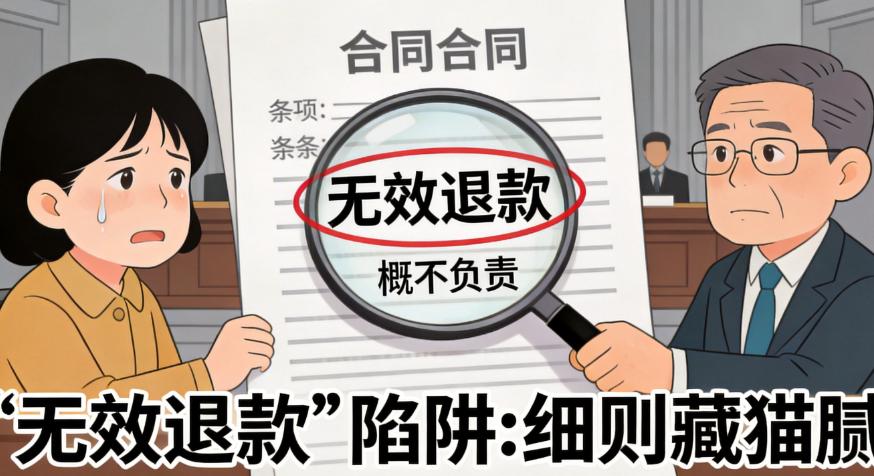
III. The so-called “invalid refund” is often just a sales gimmick.
Many people feel reassured by the mention of an “invalid refund,” but in this guide to avoiding pitfalls in Korean cosmetic surgery, I aim to expose this illusion.
1. Who defines what constitutes “effective” results? This is where things get complicated. If you think the treatment didn’t achieve the desired results, and the hospital shows before-and-after photos claiming a 0.1-millimeter improvement at the corners of your eyes, how can you determine whether it’s effective or not? The outcomes of cosmetic surgery are highly subjective and difficult to define legally.
2. The numerous obstacles in the refund process: Even if a hospital agrees to refund you, it may require you to provide various cumbersome documents or even ask you to stay in Korea for several months for “observation.” For tourists, the time and cost involved far outweigh the amount of the refund, so most end up giving up.
3>Changing terms to continue deducting money: Some hospitals claim they can refund you, but then deduct so-called “anesthesia fees,” “material costs,” or “consultation fees,” leaving you with less than 30% of the original amount. This is a typical example of a deceptive “invalid refund” scheme.
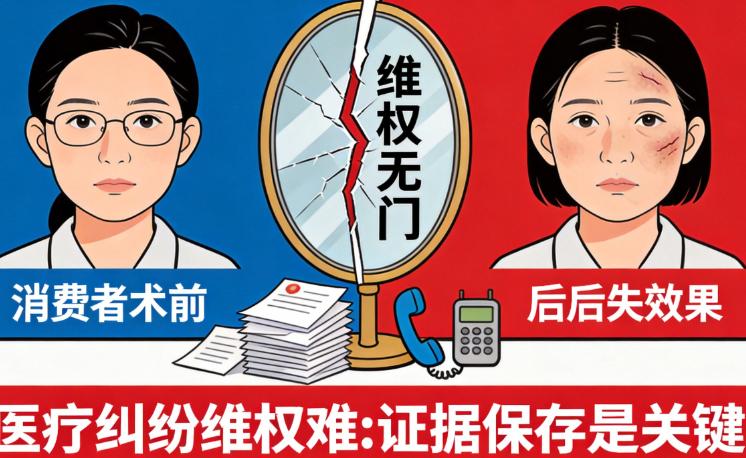
IV. Why is it so difficult to seek justice in Korean medical disputes?
Many people ask me, “What if something goes wrong during my treatment in Korea? Can’t I sue them?” This is a serious issue addressed in this guide: the cost of pursuing legal action is extremely high.
1. Legal barriers to cross-border litigation: If you want to file a lawsuit in Korea, you need to hire a Korean lawyer, have all your medical records translated, and navigate the Korean legal system. For ordinary tourists, this represents a huge financial and emotional burden.
2. The protective stance of accreditation agencies: In Korea, medical disputes are adjudicated by specialized arbitration bodies. Although these institutions are supposed to be impartial, operating in a foreign country means that language barriers and the complexity of technical terms pose significant disadvantages for foreign patients.
3. Hospitals’ “vanishing” tactics: Some unlicensed clinics that target foreigners may simply dissolve and re-open under a new name after a major medical incident occurs. You might return to your home country only to find that the people you contacted are no longer available—this kind of “cross-border disappearance” is truly despairing.
5. Five common pitfalls in Korean cosmetic surgery, many people fall for them
To make this guide to avoiding pitfalls in Korean cosmetic surgery more practical, our expert has summarized the five most common issues. Check if these describe your experience.
1. “Ghost doctors” performing surgeries unseen
During the consultation, you might meet a well-known, experienced chief physician. But once you’re under anesthesia, the surgeon might actually be an intern or a less experienced doctor. This is one of the most unethical practices in Korean cosmetic surgery.
- Prevention tip: Request that the operating room be equipped with surveillance cameras, or choose a clinic that provides on-site accompaniment, such as by a translator.
2. Excessive power of the “chief physician”
In Korea, consultants are referred to as “chief physicians.” Many of these chief physicians have sales targets and may push you to undergo unnecessary procedures just to meet their quotas, sometimes even going against the doctor’s recommendations.
- Prevention tip: Remember that the chief physician is primarily responsible for sales. Make sure to confirm the final treatment plan directly with the doctor.
3. Cheating on the amount of medicines and supplies provided
When providing treatments like Magi, they won’t show you the packaging or open it in front of you; for hyaluronic acid injections, they use cheap alternatives to high-quality products.
- Tip to avoid scams: Make sure all medications and equipment probes are opened in front of you and their authenticity is verified by scanning codes.
4. The unwritten rule of “foreigner prices”
For the same service, locals in Korea pay one price, while foreigners have to pay three times as much. Hospitals justify this by claiming it includes “translation fees” and “tax refund procedures.”
- Tip to avoid scams: Check transparent price lists on professional platforms like BeautsGO in advance so you know what to expect.
5. Post-treatment care is often neglected
In cosmetic surgery, “30% treatment and 70% recovery” is often emphasized. Many hospitals charge and then ignore patients’ concerns about postoperative swelling or infections, always responding with “this is normal, just wait a bit longer.”
- Tip to avoid scams: Ask clearly about what post-treatment care is included during the appointment, and whether there is Chinese-language online support.
The big brother’s honest summary
I’m not writing this guide to scare people away from cosmetic surgery in Korea, but to help everyone make more rational decisions when pursuing beauty. Cosmetic surgery is a scientific process, not some form of mysticism, and certainly not something that can be simply “returned” if it doesn’t meet expectations. Remember this: Good cosmetic surgery is about doctors helping you “improve” your appearance based on your conditions and safety considerations; bad cosmetic surgery, on the other hand, is about sellers trying to “recreate” your appearance according to their own interests and budget constraints.