

Today, instead of talking to you about which hospitals have the best facilities, I’m going straight to the point and sharing a comprehensive 【South Korea Cosmetic Surgery Guide】 packed with useful tips. Let me make it clear: when it comes to cosmetic surgery in South Korea, any clinic that promises “guaranteed success” or a “full refund if results aren’t satisfactory” is almost certainly trying to trick you! Medical treatments inherently involve individual differences and risks, and no legitimate doctor would ever dare give such guarantees. If you want beautiful results without worries, you absolutely need to keep this guide firmly in mind.

I. Why have there been frequent discussions about avoiding pitfalls in South Korea’s medical aesthetics industry in recent years?
To be honest, when I first entered the industry ten years ago, South Korea’s cosmetic surgery industry was regarded as something almost sacred. But in recent years, with countless posts on social media about disappointing experiences and overcharging in South Korea’s cosmetic surgery sector, the demand for guides to help avoid pitfalls in this field has surged.
1. Profit opportunities arising from information gaps: Despite the advanced state of the Internet today, language barriers remain a significant obstacle. Many unscrupulous intermediaries take advantage of people’s inability to understand Korean or navigate local Korean forums to present obscure “small clinics” as top-tier medical institutions.
2. The series of traps after attracting customers with low prices. You might see online ads claiming that a Thermage treatment can be done for just a few hundred RMB, but once you arrive at the clinic, the director never shows up—instead, the consultant (or clinic manager) keeps pushing products at you relentlessly. By the time it’s time to pay, there’s suddenly an unexpected “management fee” of tens of thousands of RMB added on.
3. Misunderstandings in consultation and communication: The “natural, mother-like look” you desire might be interpreted by some mass-produced cosmetic clinics in South Korea as a “standard influencer face.” Poor communication can lead to completely different results from what was expected, which is why everyone is looking for reliable guides to avoid pitfalls when seeking cosmetic treatments in South Korea.

II. Beware of “guaranteed success” promises: There is no such thing as 100% guaranteed results in medical treatments
In the guide to avoiding pitfalls in medical aesthetics in South Korea, the most important thing to remember is this: if anyone promises a “100% success rate,” walk away immediately!
1. Individual differences are the biggest factor. Everyone’s constitution, metabolic rate, and bone structure vary. Even with the same Filler injection, some people absorb it quickly while others see longer-lasting results; similarly, when it comes to Double eyelid surgery, some recover well while others are prone to scarring. While doctors can ensure the procedure is performed properly, they can’t control how your cells respond.
2. Medical risks can never be completely eliminated. Every surgery carries risks, even minimally invasive ones. Professional doctors will inform you about possible postoperative issues such as swelling, bruising, and asymmetry, and explain how to deal with them. Those who claim “there are no problems at all” are usually trying to trick you into paying quickly.
3. The “psychological tactics” behind excessive promises – These clinics exploit the anxiety of those seeking cosmetic treatments. They know you’re afraid of failure, so they use false promises to give you a sense of security. This is essentially a marketing tactic, not an expression of medical integrity.
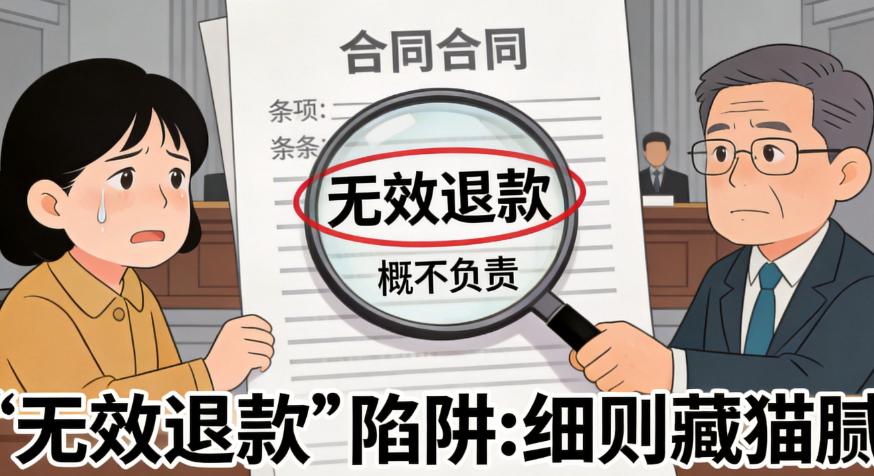
III. The so-called “invalid refund” is often just marketing rhetoric.
Many women feel more at ease knowing that the phrase “refund if ineffective” is mentioned at the end. But in this guide to avoiding pitfalls in South Korea’s cosmetic surgery industry, I’m here to burst this illusion.
1. Who decides what constitutes an “effective” result? This is where the most disputes arise. If you feel your face hasn’t been lifted, but the clinic shows you before-and-after photos taken from different angles, claiming that your eye corners have been lifted by just 0.1 millimeters, is that considered effective or not? The outcomes of cosmetic procedures are highly subjective, making it difficult to define them legally.
2. The numerous obstacles in the refund process: Even if the clinic agrees to issue a refund verbally, they will still demand various complicated proofs from you, and may even require you to stay in South Korea for several months as part of an “observation period.” For tourists, the time cost far exceeds the amount of the refund, so most people end up giving up on the matter.
3. Changing the name to keep deducting money – Some hospitals claim they can refund the amount, but they deduct so-called “anesthesia fees,” “consumable costs,” and “consultation fees with experts.” As a result, less than Samseong of the original amount is actually refunded. This is a typical example of deceptive “fake refunds.”
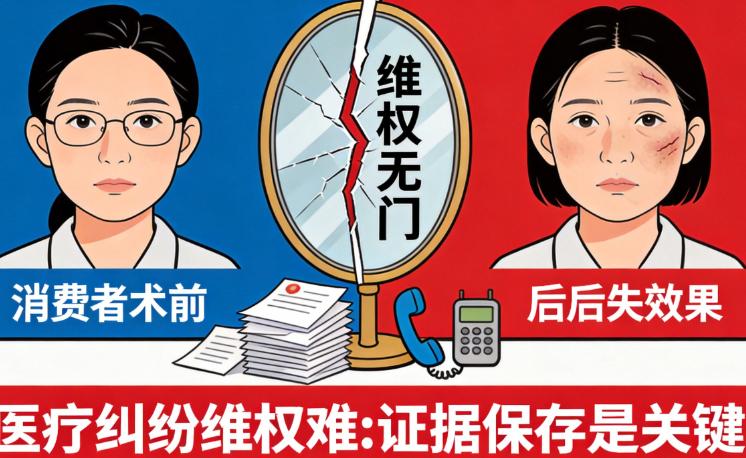
IV. Why is it difficult to seek redress for medical disputes in South Korea?
Many ladies ask me, “Big bro, what if something goes wrong during my procedure in South Korea? Can’t I sue them?” This is one of the more serious aspects covered in the guide to avoiding pitfalls in South Korea’s cosmetic surgery industry: the cost of seeking legal recourse is extremely high.
1. The legal hurdles of international lawsuits: If you want to file a lawsuit in South Korea, you need to hire Korean lawyers, have all medical records translated, and navigate the country’s legal system. For ordinary tourists, this represents a huge financial and emotional burden.
2. Protectionism by appraisal agencies In South Korea, determining medical accidents requires specialized medical arbitration institutions. Although these bodies are supposed to be impartial, being in a foreign country means that language barriers and difficulties in understanding technical terms pose inherent disadvantages for foreign clients during the appraisal process.
3. Hospitals’ “vanishing” tactic: Some unlicensed clinics that cater specifically to foreigners may simply shut down their operations after a serious medical accident and reopen under a new name. By the time you return to your home country, you can no longer get in touch with them—this kind of “cross-border disappearance” is truly disheartening.
V. 5 Common Traps in South Korea’s Medical Aesthetics Industry That Many People Fall For
To make this guide to avoiding pitfalls in South Korea’s medical aesthetics industry more practical, the expert has identified the 5 most common issues people run into—take a look and see if they apply to you.
1. The “ghost doctor” operating in the shadows
What you see during the in-person consultation is a well-known, highly experienced senior doctor. But once you’re under anesthesia and asleep, the scalpel ends up in the hands of an intern or a less experienced physician. This is one of the worst practices in South Korea’s cosmetic surgery industry.
- Tips to avoid pitfalls: Ensure the operating room is equipped with surveillance, or choose a hospital that offers full accompaniment (such as having a translator present).
2. The “room leader” has too much power.
In South Korea, consultants are referred to as “room leaders.” Many of these room leaders have sales targets, so they’ll push hard to add extra procedures for you in order to earn commissions, sometimes even giving medical advice beyond what doctors would recommend.
- Tips to avoid pitfalls: Remember, the room manager is just a salesperson — you must confirm the final plan in person with the doctor themselves.
3. Underpayment for pharmaceuticals and consumables
For Thermage treatments, they refuse to show you the packaging or open it on the spot; for hyaluronic acid injections, they use cheap products instead of high-quality ones.
- Pro tips to avoid pitfalls: All medications and device probes must be unsealed on-site, with a barcode scan to verify their authenticity.
4. The unspoken rule of “foreigner prices”
For the same procedure, South Koreans pay one price, while foreigners have to pay three times as much. The hospitals claim these extra fees cover “translation costs” and “tax refund processing fees”.
- Pro tips to avoid pitfalls: Check transparent price lists on professional platforms like BeautsGO in advance so you know what to expect.
5. Post-procedure recovery is often overlooked
In the field of cosmetic medicine, “three parts treatment and seven parts recovery” are crucial. Many hospitals charge patients for the surgery and then leave them alone—ignoring inquiries about postoperative swelling or infections, always responding with “It’s normal; just wait a bit longer.”
- Pro tips to avoid pitfalls: Ask clearly at the time of booking what’s included in post-surgery care, and whether there’s Chinese-language online support available.
Big Brother’s Truth Summary
I wrote this guide to helping people avoid pitfalls in South Korea’s cosmetic surgery industry not to scare them, but to encourage greater rationality as they pursue beauty. Cosmetic surgery is a science—not some form of mysticism, nor is it an “exchange guarantee” outlined in contracts. Remember what the experts say: good cosmetic surgery involves doctors modifying your appearance based on your individual conditions and ensuring safety; whereas poor-quality procedures involve salespeople manipulating your look according to your budget and driven by profit motives.