
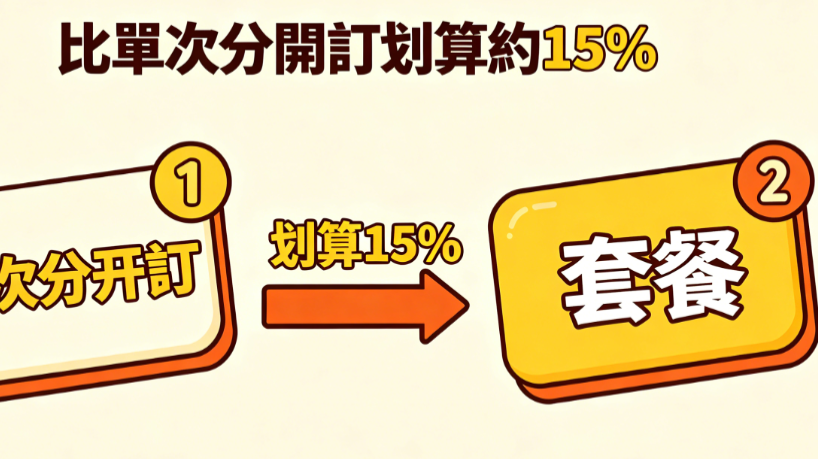
How much does it actually cost to receive Potenza treatment in South Korea? If you are still spending 4,000 to 8,000 RMB per session of full-face Potenza treatment in China, then this article is sure to shock you – because at the Gangnam Dermatology clinic in Seoul, South Korea, the premium version of the full-face Potenza treatment only costs 350,000 to 390,000 South Korean won (about 1,890 to 2,100 RMB), which is less than half the price in China! Even better, if you combine Potenza with HIFU treatment, the package fee is only 880,000 South Korean won (about 4,750 RMB), saving you approximately 15% compared to booking them separately. In other words, with the money that would normally cover one session of Potenza treatment in China, you can get both Potenza and HIFU in South Korea and still have some money left over for other expenses. Today, we will delve into the actual prices of Potenza treatment in South Korea, the available package options, reliable clinics, and tips to avoid common pitfalls, so you can decide for yourself whether this medical beauty trip to South Korea is really worth it.
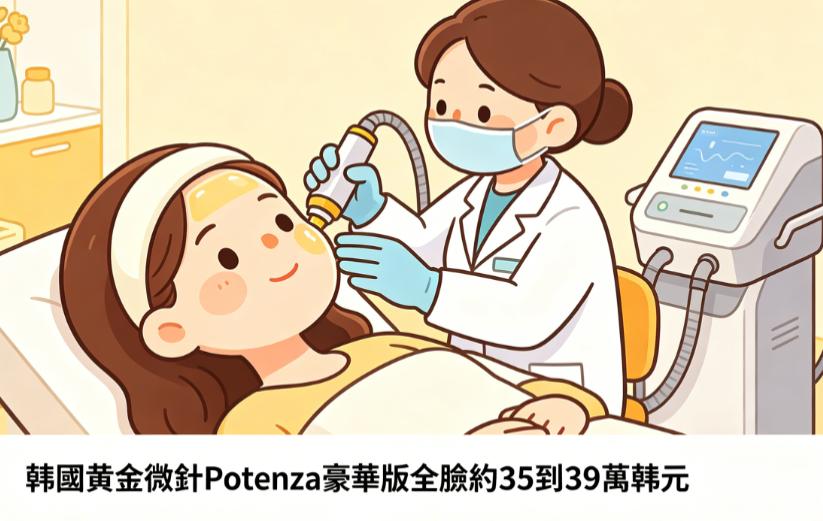
I. What is South Korea’s Potenza, the golden Potenza? 🔥 Understand it all with this article on its core technology and probe configuration.
1. Potenza is not an ordinary microneedle; it represents the top-of-the-line version of “radiofrequency microneedles”.
Developed originally by South Korea’s MONTMEDICAL, Potenza has received dual certifications from the US FDA and South Korea’s KFDA. Its core mechanism involves using extremely fine gold-plated microneedles to penetrate the dermis at a depth of 0.5–3.5 mm (adjustable), while simultaneously releasing dual-frequency radiofrequency energy at 1 MHz and 2 MHz. This precisely heats the dermis, stimulating the massive production of new Collagen and elastic fibers. Unlike traditional roller microneedling techniques, which rely solely on physical stimulation, Potenza’s radiofrequency heat energy can effectively “sew” loose Collagen fibers back together, resulting in more lasting and deeper effects.
2. These five types of probes are designed to address different skin issues, rather than providing a one-size-fits-all solution.
The Potenza comes standard with five different treatment probes, allowing physicians to select the most appropriate one based on each individual’s skin type and specific areas of concern: The N-25 non-insulated probe (25 needles) is ideal for treating enlarged Pores and oily skin; the I-25 insulated probe (25 needles) is designed to address acne scars and skin laxity; the CP-25 Pumping Tip, which can be used in conjunction with regenerative injectables such as Rejuran, Juvelook, or Asce+ Exosomes, helps deliver medications effectively; the One Tip single-needle probe is perfect for targeting delicate areas like the eye contour; and the Diamond Tip, a needle-free probe, provides non-invasive treatment for sensitive skin. The true luxury of this device lies not only in its high-quality probes but also in the fact that the clinic director adjusts the energy settings specifically for different areas of the face—such as the T-zone, U-zone, and eye contour—to ensure a personalized treatment plan for every patient.
3. What is the difference between Potenza and domestic Potenza needles?
Most domestically produced Potenza devices use single-frequency radiofrequency technology, which has limited penetration depth and a relatively limited range of operational modes. In contrast, Potenza’s dual-frequency radiofrequency system (1MHz for deep layers + 2MHz for superficial layers) allows for simultaneous treatment of both dermal tightening and epidermal rejuvenation. More importantly, Potenza’s probes are disposable, original factory-made consumables – each new probe comes with an anti-counterfeiting traceability code, effectively eliminating the risk of cross-infection caused by reusing probes. This is also why, in South Korea, although the cost of using Potenza devices in legitimate Dermatology clinics is relatively low, no expense is spared on the purchase of these probes.

II. Price details of the luxury version of Potenza for the entire face in South Korea 💸 What exactly is included in the price range of 350,000 to 390,000 South Korean won?
1. Definition of the “Luxury Edition”: It is not the cheapest version available.
The basic version of Potenza, available for 330,000 Korean won, usually only includes the basic N-25 probe for full-face treatment and does not include any medication delivery or post-treatment recovery services. On the other hand, the premium version, priced at 350,000 to 390,000 Korean won, comes standard with the following amenities: the CP-25 Pumping Tip delivery probe (one-time use, original factory product) + Juvelook or Rejuran 2-centum core medication delivery system + pre-operative anesthetic cream + post-operative regenerative laser treatment + cooling and soothing facial mask. In other words, the additional cost of the premium version translates into double the effectiveness of medication delivery and comprehensive post-treatment care.
2. Horizontal comparison of Potenza packages across different price ranges
| Package Types | Price (Korean Won) | Including probes | Including the introduction section. | Suitable for various groups of people |
|---|---|---|---|---|
| Basic Edition | Approximately 330,000 | N-25 | None | First-time experience: mild Pores issues |
| Standard Edition | Around 350,000 to 360,000 | N-25/I-25 | Essentials | Moderate improvement in Pores and skin texture |
| Luxury Edition | Around 380,000 to 390,000 | CP-25 Pumping Technique | Juvelook 2 centum core | Pores + Acne Scars + Anti-aging |
| Top-of-the-line version | Approximately 440,000 to 550,000 | CP-25 Pumping Technique | PDRN/Juvelook | In-depth regeneration + acne scar repair |
3. The actual cost after converting it into RMB
Taking the luxury version priced at 390,000 South Korean won as an example, and calculated at the current exchange rate of approximately 10,000 South Korean won = 54 yuan, this amounts to around 2,106 yuan. In comparison, the regular price of a single Potenza treatment in China generally ranges from 3,000 to 8,000 yuan, meaning the luxury version from South Korea is only 26% to 70% of the domestic price. If you include the round-trip airfare (about 1,500 yuan during off-season), completing 2 to 3 treatments will be enough to cover the cost of the flight.

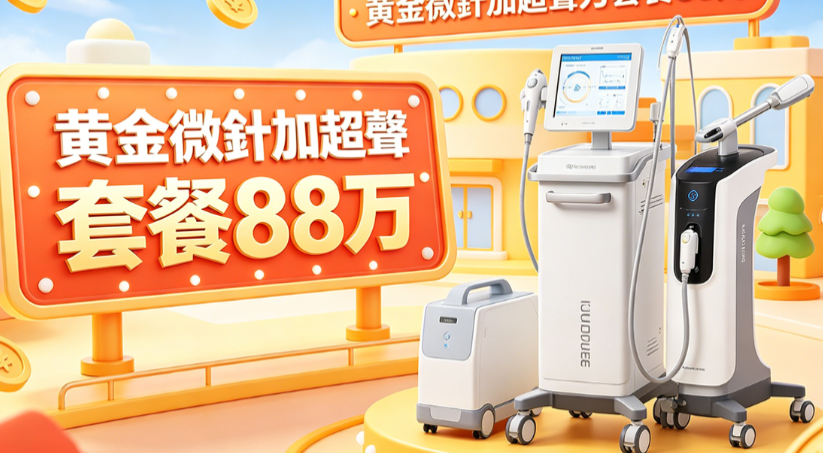
III. The package combining Potenza and HIFU in South Korea costs 880,000 💰 – it’s definitely more cost-effective than ordering these treatments separately.
1. Package breakdown: Price comparison between individual services and packages
If booked separately: The premium version of Potenza for the entire face costs approximately 390,000 South Korean won, while the Ulthrea Ultherapy Prime with 300 treatments costs around 1,089,000 South Korean won, for a total of approximately 1,479,000 South Korean won. However, if you choose the package deal, the combination of Potenza and HIFU only costs 880,000 South Korean won, saving you approximately 599,000 South Korean won (equivalent to around 3,230 Chinese yuan), which represents a discount of up to 40%! This is precisely why many local South Koreans also opt for package deals – booking these services individually is simply not cost-effective.
| How to make an appointment | Portfolio of projects | Total price (Korean won) | Agreed on the amount in RMB |
|---|---|---|---|
| Book separately | Potenza Premium Edition + 300 HIFU treatments | Approximately 1.479 million | Approximately 7,980 yuan |
| Package deals | Potenza + HIFU combined package | 880,000 | Approximately 4,750 yuan |
| Save money | — | Approximately 599,000 | Approximately 3,230 yuan |
2. Why can a package be so much cheaper?
The pricing logic in Dermatology in South Korea is different from that in China. In China, many institutions charge based on the individual cost of each treatment, so the more treatments a patient receives, the higher the total cost. However, in the highly competitive Dermatology market in South Korea, package deals have become a common strategy to attract customers. By offering a “package discount,” hospitals can lure patients in and then encourage them to pursue additional treatments through follow-up visits and word-of-mouth recommendations. Moreover, when two treatments are performed during the same visit, the costs for anesthesia, disinfection, and post-treatment care can be shared, resulting in lower operating expenses for the hospital. As a result, hospitals are more willing to offer discounts to their customers.
3. Synergistic effects of the package: The anti-aging combination of 1+1>2
Potenza targets Pores, acne scars, and skin texture; HIFU focuses on SMAS fascia lifting and contour tightening. These two treatments act on different layers of the skin: Potenza stimulates collagen regeneration in the dermis, while HIFU provides deep lifting in the fascia layer. Their effects complement each other rather than conflicting. After completing the treatment package, patients can observe not only narrowed Pores and improved skin texture but also a tighter jawline and elevated Apple Zone – truly achieving “multi-layer anti-aging” results.
IV. Why are Potenza in South Korea so inexpensive? The truth behind the price difference between China and South Korea
The equipment is manufactured in its place of origin, so there are no additional costs involved in the distribution process.
Potenza is manufactured by the South Korean company MONTMEDICAL. In South Korea, the price of equipment purchased for Dermatology clinics is at least 30-40% lower than when imported through overseas agents. In China, genuine Potenza products go through a four-level distribution chain: from the South Korean manufacturer to the Chinese general distributor, then to provincial agents, and finally to the clinics themselves, with each stage adding a 15-30% mark-up. However, South Korean Dermatology clinics purchase the products directly from the manufacturer, eliminating all intermediate links. Similarly, the cost of probe consumables is much lower when purchased directly from the place of production, which is also the fundamental reason why South Korea can offer a price of “350,000 yuan for a full face treatment including probes”.
2. Market density determines prices: In Gangnam District, there are over 50 Dermatology clinics per square kilometer.
The density of medical beauty services in Gangnam District, Seoul, ranks first in the world. In the Apgujeong area alone, there are over 200 legitimate Dermatology clinics. In such a highly competitive environment, price transparency and package combinations have become inevitable trends. If any Dermatology clinic dares to charge excessively, customers will simply go to the one next door. Although there are also many medical beauty institutions in first-tier cities in China, the number of clinics equipped with genuine Potenza devices is relatively limited, resulting in a supply shortage and consequently higher prices.
3. There are no “consultant commissions” or “channel fees”.
In South Korea, the pricing model in Dermatology clinics is as follows: the director conducts a face-to-face consultation, develops a treatment plan, and then provides the final price. There are no intermediate steps involving consultants or aesthetic designers, nor are there any commissions involved in the sales process. In contrast, in China, consultants at many large medical aesthetics institutions earn commissions ranging from 15% to 30% of the total project cost, while agencies operating through medical hospitals may even charge up to 50% in commissions. By eliminating these intermediate costs, the actual cost of treatment in South Korea is significantly lower. This is also the reason why in South Korea, “the price listed on the official website is exactly the same as the price at the clinic,” with no hidden fees or additional charges.

V. Where to get Potenza treatments in South Korea? 🏨 A guide to selecting reliable Dermatology clinics in Gangnam and Myeongdong
1. Selection criteria: All four mandatory indicators are essential.
Equipment Certification: The device must bear the original “MONTMEDICAL” logo; the probe is equipped with an anti-counterfeiting traceability code, which can be verified on-site upon opening the package.
Qualifications of the Clinic Director: Preferably, a specialist in Dermatology (rather than a general cosmetic practitioner) should be appointed. It is advisable to request to see the doctor’s license, and it is ideal if the practitioner has over 3,000 cases of Potenza treatment experience.
Transparent Pricing: Clear prices are displayed on the official website/app, without any hidden fees. The same price is applied to both Chinese and Korean customers.
Chinese-language Services: Provision of Chinese translation services or Chinese-speaking customer support to avoid communication misunderstandings that could lead to deviations in the treatment plan.
2. Recommended development direction for Gangnam District (high-end positioning + technical expertise)
The Dermatology clinics in the areas of Gangnam Apgujeong and Cheongdam are equipped with the most advanced facilities, and their directors have extensive experience – with most having performed over 5,000 Potenza treatments. Representative clinics include Cheongdam ELEV Private Antiaging Center (Potenza full-face treatment costs approximately 340,000 to 380,000 KRW), abijou Dermatology (PDRN Potenza starting from 440,000 KRW, Juvelook Potenza starting from 550,000 KRW), and UH CELL Dermatology (their official website is well-translated into Chinese, and the clinic is located in the heart of Gangnam). The advantage of these clinics in Gangnam is their advanced technical capabilities and rapid equipment updates; however, patients are required to have a certain level of proficiency in Korean or English for communication.
3. Recommended areas in Myeongdong/Hongdae (great value for money + user-friendly Chinese options)
At Reberry Dermatology in Myeongdong, the initial trial price for Potenza is 249,000 South Korean won, while the Pores treatment package costs 490,000 South Korean won (including Juvelook introduction + regenerative laser therapy). The chief physician, Baek Seung-jae, has performed this procedure over 6,000 times personally. Payments can be made via Alipay or WeChat Pay. The clinic is located just 2 minutes away on foot from Exit 8 of Myeongdong Station. Kleam Dermatology and MADE u Dermatology in Hongdae also have an excellent reputation for their Potenza services, making them ideal for young customers with limited budgets but a desire for high-quality equipment. The advantages of clinics in Myeongdong/Hongdae include well-developed Chinese-speaking services, convenient payment options, and proximity to shopping areas, making them perfect for first-time visitors to South Korea looking to pursue medical aesthetics treatments.
VI. Recovery timeline and effects after Potenza treatment in South Korea ⏰ From Day 1 to Day 90
1. 1–3 days after the procedure: Redness and minor pinhole marks
On the day of the treatment, the face will become uniformly red and show very tiny pinhole marks, similar to the effect of mild sunburn. The redness begins to subside 2-3 hours after the procedure; apply a thick layer of regenerative repair cream before going to bed. By the second day, the pinhole marks are almost invisible, and you can wash your face normally, but avoid using any makeup. On the third day, the redness has completely disappeared, and you can wear light makeup when going out. During this period, it is essential to take proper sun protection measures—ultraviolet rays are the number one enemy of collagen regeneration, so inadequate sun protection would render the entire treatment ineffective.
2. 7 to 30 days after the procedure: The initial phase of skin quality improvement begins.
Starting from the 7th day, the metabolism of the epidermis accelerates, making the Pores visibly narrower and the skin tone more even. Between the 14th and 21st days, a large amount of new Collagen begins to be produced in the dermis, gradually enhancing the skin’s firmness and elasticity, resulting in a supple and resilient texture. Around the 30th day, the first peak of effects is observed: the Pores are reduced by more than 30%, the skin tone lightens by one shade, and fine lines become less noticeable. This is also the reason why many people find themselves “addicted” to this treatment after just one session.
3. 30–90 days after the procedure: Continuous optimization + synergistic effects
If combined with the HIFU package, the Lifting effects of the SMAS fascia layer begin to become apparent after 30 days – the jawline becomes sharper, the Nasolabial Fold Correction fades, and the position of the Apple Zone is elevated. The synergistic effect of Potenza and HIFU reaches its peak between the 60th and 90th day. It is generally recommended to undergo 3 treatments as a complete course (with an interval of 4–6 weeks between each treatment), and thereafter, maintenance sessions every 6–12 months will help maintain the results. It is important to avoid high-temperature environments (such as saunas or steam rooms) and strenuous exercise for one month after the procedure to allow the skin sufficient time to heal.
7. Is it really worth flying all the way just to try South Korea’s Potenza? ✈️ Doing the math will make it clear.
1. Direct comparison of one-time costs
The cost of a genuine Potenza full-face treatment in China ranges from approximately RMB 3,000 to 8,000 per session (with most cities falling within the range of RMB 4,000 to 6,000). In South Korea, the luxury version of the full-face treatment costs around RMB 1,890 to 2,100 per session, resulting in a price difference of approximately RMB 1,900 to 5,900 per session. If the patient opts for the combined treatment of Potenza and HIFU, the cost in South Korea is 880,000 South Korean won, which is approximately equivalent to RMB 4,750. In China, however, the separate costs would amount to at least RMB 6,000 + RMB 15,000 = RMB 21,000, representing a significant difference of RMB 16,250. This gap is no longer merely a matter of “being a little cheaper”; it represents a clear “order of magnitude difference” in cost.
2. Add the total cost of the flight and accommodation.
During the off-season, the round-trip airfare to Seoul costs approximately 1,500 RMB. 2 nights of economy-class accommodation cost around 600 RMB, and food, transportation, and other expenses add another 500 RMB, bringing the total to roughly 2,600 RMB. If you undergo all three treatments in one trip (Potenza + HIFU + Rejuran), the total cost in South Korea would be 4,750 + 1,300 + 2,600 = 8,650 RMB. In contrast, performing these same treatments in China would cost at least 6,000 + 15,000 + 3,000 = 24,000 RMB. The savings of 15,350 RMB are enough for two more trips to South Korea, not to mention the additional opportunities for traveling, shopping, and enjoying authentic Korean cuisine.
3. Who shouldn’t consider flying just for this purpose? A quick rule of thumb
If your main requirement is simply a basic Potenza treatment, and there is a reliable and authorized institution offering this service in your city at a price of less than 3,000 yuan per session, then having the treatment done locally might be more convenient. However, if you need to undergo more than two cosmetic procedures, or if the cost of Potenza treatments in your city exceeds 5,000 yuan per session, then traveling to South Korea is definitely more cost-effective. Additionally, if you are already planning a trip to South Korea for shopping, getting cosmetic treatments there would be an excellent “extra benefit” that makes the trip even more worthwhile.
| Comparative dimensions | Done domestically | Fly to South Korea for treatment |
|---|---|---|
| Single-price for Potenza | 3,000 to 8,000 yuan | 1,890 to 2,100 yuan |
| Equipment certification ensures safety and reliability. | You need to verify its authenticity yourself. | Direct supply from the manufacturer + anti-counterfeiting traceability code |
| The dean personally performed the procedure. | Not necessarily; it could be a nurse. | It is possible to designate the dean to personally handle this task. |
| Richness of projects | Limited by equipment procurement constraints | Over 300 available Dermatology options |
| Additional costs | Just transportation/time. | +Flight and accommodation cost approximately 2,600 yuan. |
| Suitable for various groups of people | Limited products and budget | 2+ projects, focusing on cost-effectiveness |
VIII. Guide to Avoiding Common Pitfalls When Using Potenza in South Korea ⚠️ 6 Areas Where You Are Prone to Falling into Traps
1. The low-price trap: Be cautious when considering a “full-face Potenza” treatment for less than 300,000 Korean won.
The cost of genuine Potenza probes is approximately 80,000 to 100,000 South Korean won per unit. If a price offered is lower than 300,000 South Korean won and still includes the probe, it is either because the probe has been recycled and reused, or it is not a genuine Potenza device at all. Remember: In South Korea, the price of genuine Potenza full-face sets including probes should be at least around 300,000 South Korean won. Any offer that is significantly cheaper is definitely suspicious.
2. “Additional fees for translation”: You have to pay an extra 15-30% when booking through an intermediary.
Some unscrupulous intermediaries take advantage of the price difference between Chinese and Korean customers. What might originally be a service costing 330,000 Korean won can suddenly become 400,000 won after going through one intermediary. The best way to ensure transparent pricing is to book directly through the official website or legitimate platforms like BeautsGO. On such platforms, the prices for Chinese and Korean customers are the same; there is no such thing as a “foreigner price.”
3. Emphasize that “the dean personally performs the procedure” rather than “a team takes turns doing it”.
In South Korea, some large-scale chain Dermatology clinics operate on a “assembly line” model: the consultant conducts the initial consultation, the nurse performs the actual treatment, and the director merely makes an appearance. However, the effectiveness of the Potenza treatment highly depends on the doctor’s immediate judgment regarding the energy settings and the precision of their techniques; different practitioners may result in significantly different outcomes. When making an appointment, it is essential to confirm that “the director will perform the entire procedure personally” and it is advisable to choose a clinic that clearly states “treatment performed by the director”.
4. Post-surgery restoration projects were subject to cut corners and substandard workmanship.
Some clinics offer package deals that seem cheap, but after the procedure, they only provide a regular facial mask, and the regenerative laser treatment is merely a formality. A standard premium package should include the following: 10–15 minutes of professional-level regenerative laser treatment + a medical cold compress mask for soothing the skin + an after-procedure regenerative repair cream – none of these can be omitted. When making a reservation, make sure to confirm each item in the post-treatment care package; don’t let vague terms like “all-inclusive package” mislead you.
5. Additional taxes and hidden fees
In South Korea, the prices for medical beauty treatments usually do not include a 10% VAT, which is added only at the time of payment. It is essential to ask clearly before making a reservation: “Does this price already include tax?” Additionally, some clinics may charge additional hidden fees such as “consultation fees” or “disinfection material costs.” It is important to confirm the total cost in advance to ensure it does not exceed your budget. Reputable clinics will generally inform you of the total price including tax in advance and will not charge extra afterwards.
6. Avoid weekends and South Korea’s public holidays
For local residents in South Korea, the peak times for undergoing cosmetic procedures are on weekends and public holidays. In such cases, the clinic director may be handling multiple clients simultaneously, which reduces both the amount of time available for each procedure and the level of attention given to each patient. It is recommended to schedule appointments during the mornings from Tuesday to Thursday, as this will ensure that you receive the maximum amount of time and dedicated attention from the clinic director. Avoid major holidays such as South Korea’s Spring Festival (the first day of the first lunar month) and Mid-Autumn Festival (the 15th day of the eighth lunar month), as many clinics are closed during these periods.
IX. FAQ about Potenza in South Korea 💬 6 most frequently asked questions by customers traveling to South Korea
Q1: How far in advance should one make a reservation for Potenza treatment in South Korea?
A: Generally speaking, it is necessary to make an appointment 1-2 weeks in advance at well-known Dermatology clinics, especially if you wish for the clinic director to perform the procedure personally. If this is your first time visiting South Korea, it is recommended to start contacting the clinics 2-3 weeks before your trip to confirm the available time slots. Many clinics support Chinese-language reservations via WeChat or Line, so communication will not be a problem. It is also advisable to reserve 2-3 alternative clinics in case the preferred time slot is already booked.
Q2: I don’t speak Korean. How can I get Potenza treatment in South Korea?
A: There’s absolutely no need to worry. Most of the mainstream Dermatology clinics in Gangnam and Myeongdong offer Chinese translation services throughout the entire process – from initial consultations to treatments and post-operative instructions. Many clinic staff, including front desk personnel, consultants, and even clinic directors, can communicate in basic Chinese. Moreover, with the widespread use of payment apps like Alipay and WeChat, language barriers or payment issues are no longer a concern. It’s recommended to add the clinic’s WeChat account in advance and prepare a list of questions in Chinese to send before visiting the clinic; this will make the process much more efficient.
Q3: How long does the effect of a single Potenza treatment last?
A: The effects of a single treatment usually last for 6 to 12 months, depending on an individual’s skin type, age, and lifestyle. It is generally recommended to undergo 3 treatments in a series as a complete course of treatment (with an interval of 4 to 6 weeks between each treatment), as this allows the benefits of collagen regeneration to reach their peak. After 3 treatments, Pores can be reduced by 60% or more, and acne scars can be improved by 50 to 70%. Subsequent maintenance treatments every 6 to 12 months will help maintain these results in the long term. Exposure to ultraviolet rays and staying up late can accelerate the loss of collagen; therefore, daily sun protection and a regular sleep schedule are crucial for ensuring the durability of the effects.
Q4: Can Potenza and HIFU be used on the same day?
A: Definitely! This is also the original intention behind the design of this package. Generally, patients first undergo HIFU (a non-invasive procedure with no recovery period) and then receive Potenza treatment. These two treatments have different effects: HIFU provides deep Lifting at the SMAS fascia layer, while Potenza stimulates collagen regeneration in the dermis layer. They do not interfere with each other but instead complement each other. If both treatments are done on the same day, the recovery period will total approximately 3 to 5 days, but the benefits will also accumulate. After 1 to 3 months, significant improvements in both skin quality and contour can be observed. This is also why the 880,000-yuan package offers such great value for money.
Q5: Can people with sensitive skin use Potenza Potenza?
A: Definitely. In fact, Potenza even has a certain restorative effect on sensitive skin. The key is that the doctor will select the appropriate probe based on the degree of your skin sensitivity – for example, the Diamond Tip needle-free mode or the low-energy N-25 mode – and adjust the energy settings accordingly. It’s recommended that you inform the doctor about your skin sensitivity and any history of allergies during the consultation, so they can develop a personalized treatment plan for you. If your skin is currently experiencing severe allergies or inflammation, it’s best to wait until these symptoms subside before undergoing treatment.
Q6: Can I go shopping and apply makeup immediately after receiving Potenza treatment in South Korea?
A: It is not recommended. On the day of the procedure, the face will become red and it is not suitable to wear makeup. It is advised to rest for 1–2 days after the procedure; once the redness subsides on the third day, you can wear light makeup and go out as usual. If you plan to combine a medical treatment with shopping, it is better to shop first and then undergo the medical procedure (avoid wearing a mask that may rub against your face within 24 hours after the treatment), or set aside 1–2 days for recovery after the procedure. Additionally, avoid high-temperature environments such as steam saunas or saunas for at least one week after the treatment. Although these are popular attractions in South Korea, it is best to refrain from them for the sake of optimal results.
📱 Let BeautsGO help you plan your trip to South Korea for Potenza treatment now!
Through the BeautsGO platform, you can: view the current prices and qualifications of over 300 certified Dermatology clinics, compare the actual cost-effectiveness of different packages, and book appointments directly in Chinese while enjoying transparent pricing that is the same in both China and South Korea. Whether you are looking for an introductory package for first-time users or a luxury package that combines Potenza with HIFU, BeautsGO can help you find the most suitable option for you. Download the BeautsGO app or search for the WeChat mini-program “BeautsGO – Beauty Together” to start your affordable medical beauty journey in South Korea and ensure that every penny you spend is well-spent.