
Don’t you also feel that medical beauty treatments are becoming increasingly expensive in China?
A box of Rejuran PN costs 5,800 yuan, the Ulthrea treatment for the entire face starts at 15,000 yuan, and the Inmode treatment for Double Chin ranges from 8,000 yuan upwards. The moment you swipe your card, your wallet is literally “crying”.
But have you ever considered that for the same project in South Korea, the price can be more than half lower?
This is neither a promotional gimmick nor a “limited-time offer” during discount seasons. Instead, these represent the regular prices in South Korea’s medical beauty market: the Rejuran PN costs around 1,600 yuan in Gangnam, the Inmode for Double Chin treatment starts from 1,500 yuan, and the Ulthrea for full-face treatment begins at approximately 6,300 yuan. Despite using the same genuine equipment, imported consumables, and being performed by doctors certified by both the FDA and KFDA, the prices are only one-third to half of what they are in China.
Why is there such a big difference? The reason is that the medical beauty industry in South Korea operates in a market with high demand – in Gangnam alone, there are over twenty Dermatology clinics competing fiercely, and without lowering prices, no one would come. The large volume of equipment purchases, lower bulk purchase prices for consumables, and a different income system for doctors compared to China all contribute to this substantial price difference.
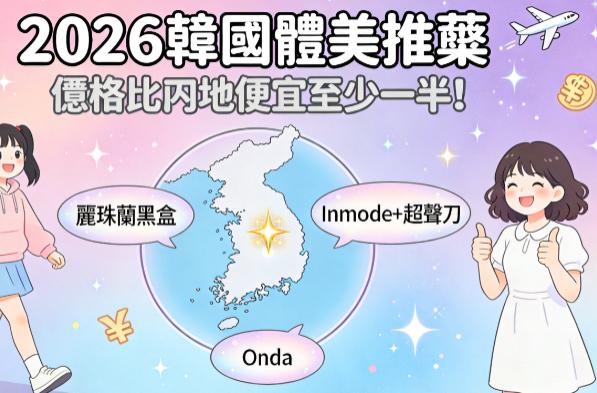
This article doesn’t merely make general statements about how “medical beauty treatments in South Korea are inexpensive”; instead, it breaks down in detail the three most worthwhile treatments to receive in South Korea in 2026 – Rejuran PN, the combination of Inmode+HIFU for treating Double Chin, and ONDA. It provides the prices in Korean won, the conversion rates into RMB, the corresponding domestic prices in China, and recommendations for hospitals where these treatments can be undergone. All this information is presented right before your eyes.
I. Recommended medical beauty product in South Korea in 2026: Rejuran PN – 1,600 yuan in South Korea vs 5,800 yuan in China; save enough money for a plane ticket!
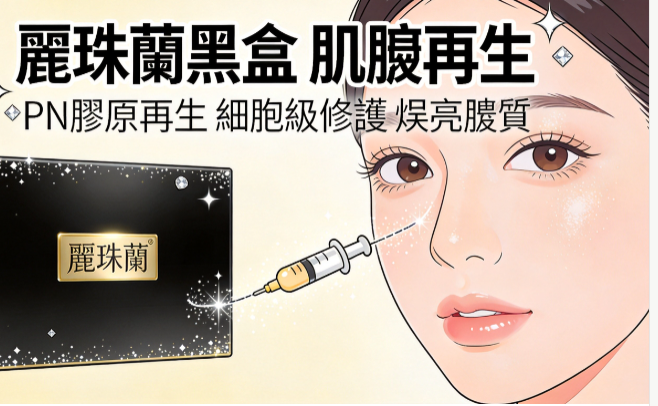
The Rejuran PN is known as the “Hermès of hydrating skincare products.” Its key ingredient is a polynucleotide (PN) extracted from salmon DNA, which effectively provides deep hydration, balances oil and water levels in the skin, and promotes the regeneration of Collagen.
The effects when applied to the face are as follows: makeup doesn’t clog the Pores, the Apple Zone becomes more prominent, and the Pores visibly shrink in size.
1. Price comparison between China and South Korea: The difference is more than just a little bit.
| Project | South Korea prices (in Korean won) | South Korea price (in RMB) | Prices in mainland China (RMB) | South Korea is inexpensive. |
|---|---|---|---|---|
| Rejuran PN 2 centum core | Between ₩270,000 and 400,000 | Ranging from approximately 1,430 to 2,120 yuan | 2,980 to 6,000 yuan | Approximately 60-75% |
| Rejuran PN 4-centum core package | Starting from ¥6.2 million | Around 3,900 yuan | 5,960 to 12,000 yuan | Approximately 50-67% |
| iRejuran 1cc (regeneration, fine wrinkle improvement) for the eye area | From ¥1.95 million to ¥350,000 | Ranging from approximately 1,035 to 1,855 yuan | 2,500 to 5,000 yuan | Approximately 60% or more |
| Rejuran Blue Box, 2 centum cores | Starting from ¥5 million | Starting from approximately 2,650 yuan | Between 4,500 and 8,000 yuan | Approximately 40-60% |
Recommended clinics: Gangnam baid Hospital’s Rejuran PN treatment costs 927,000 won (approximately 1,430 yuan); CHEONGDAM ANZ Dermatology’s 4-centum core package costs 973,600 won (approximately 3,900 yuan, including a post-treatment soothing mask); Busan Jryn’s Seomyeon clinic offers the lowest price at 910,000 won (approximately 530 yuan, the lowest rate in Korea).
2. What exactly are the advantages of Rejuran PN?
Rejuran is not an ordinary hyaluronic acid injection. Ordinary hyaluronic acid injections use hyaluronic acid, which reverts to its original state within 2-3 weeks after the injection. However, Rejuran contains PN polynucleotides. It does not simply “fill the skin with water” but instead stimulates your own fibroblasts to start working – causing them to produce collagen and repair the skin’s barrier on their own.
This means that the effects don’t become apparent immediately after one week but start to become more noticeable in the 2nd to 4th weeks.
3. Who is suitable for this treatment, and how often should it be done?
It is highly suitable for people over 25 years old who show signs of premature aging (deepened Nasolabial Fold Correction, sagging Apple Zone), those with “desert skin” characterized by dry skin that absorbs makeup powder easily, as well as those with “oily acne-prone skin” featuring enlarged Pores and rough texture. It is recommended to undergo the treatment 3 times in a row, with each session spaced 4 weeks apart, and then continue with maintenance treatments every 6 to 12 months thereafter.
II. Recommended medical beauty treatments in South Korea in 2026: Inmode + HIFU for treating Double Chin – Starting from 9,500 yuan in South Korea vs 23,000 yuan in China
Double Chin is often referred to as the “value-killer” for many people – despite maintaining the same weight, the contours of the jawline become increasingly blurred. Simply undergoing Inmode liposuction may remove fat but leave the skin loose; whereas using HIFU for lifting effects can tighten the skin, but the fat remains in place.
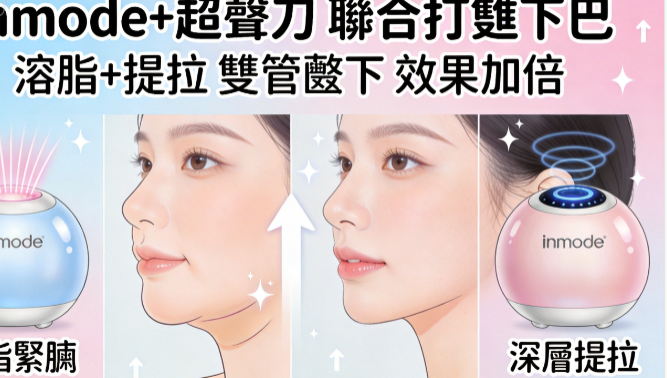
The standard treatment approach for doctors in South Korea is as follows: First, use Inmode FX to break down and dissolve the fat in the Double Chin area; then apply HIFU to use focused ultrasonic waves to tighten the SMAS fascia layer. With this combination of treatments, the Double Chin is eliminated, the jawline becomes more defined, and the face appears visibly smaller in size.
1. Details of the combined treatment plan and price comparison
| Treatment Steps | Prices in South Korea | Domestic prices | South Korea is cheap. |
|---|---|---|---|
| Inmode FX Double Chin Treatment (one session) | From ¥280,000 to ¥650,000 (approximately 1,500 to 3,500 yuan) | Between 4,800 and 8,000 yuan | 60-70% |
| The Ulthrea is used to deliver 300 treatments across the entire face. | ₩1.2 million to 1.5 million (approximately 6,300 to 7,950 yuan) | 15,000 to 25,000 yuan | 55-68% |
| 300 HIFU treatments for the entire face according to the Korean standard | ₩220,000 to ₩350,000 (approximately 1,160 to 1,855 yuan) | 8,000 to 15,000 yuan | 75-85% |
| Combination of Inmode+Ulthrea | Starting from approximately ¥1.8 million (about 9,500 yuan) | Ranging from approximately 23,000 to 33,000 yuan | Approximately 60% |
| The combination of Inmode+ and the Korean version of HIFU | Starting from approximately ¥500,000 (about 2,650 yuan) | Ranging from approximately 12,800 to 23,000 yuan | Approximately 75% |
2. Why is the combination of these two elements resulting in 1+1>2?
Inmode FX uses high-voltage electrical pulses combined with vacuum negative pressure to “suction” the fat in the Double Chin area into the treatment head, where it is precisely heated and destroyed. The entire process takes approximately 15–20 minutes. After the procedure, purple-red petechiae similar to those caused by cupping therapy will appear and will gradually fade within 3–7 days.
HIFU utilizes high-intensity focused ultrasonic waves to penetrate the epidermis and dermis and reach the SMAS fascia layer – exactly the layer that is targeted during facelift surgeries. The heat coagulation effect at 65-70°C stimulates collagen regeneration, and the effects of a single treatment can last for 1-2 years.
The key lies in the order: first perform lipolysis to reduce fat volume, and then carry out deep lifting treatments. If the procedures are reversed, with lifting done first and lipolysis later, the heat generated by lipolysis may interfere with the thermal coagulation effect already achieved by the HIFU, thereby reducing the effectiveness of the treatment. Therefore, doctors in South Korea always arrange for Inmode to be used first, followed by HIFU, with a 7-to-14-day interval between the two procedures.
3. Recommended Hospitals: Where can I find reliable combined treatment options?
CLUBMIZ LAMICHE Dermatology (Gangnam): Offers combined treatment options with Inmode+Thermage or HIFU, with transparent pricing; Onlif Plastic Surgery: Inmode FX for Double Chin treatment is available at a promotional price of ¥100,000–150,000, with plastic surgery specialists performing the procedures using liposuction techniques; Dayone Gangnam Branch: Inmode full-face treatments start from ¥200,000, plus the second-generation Ulthrea HIFU for ¥950,000 (approximately $5,035), making it an ideal option for those with limited budgets but seeking high-quality treatments.
III. Recommended medical beauty treatments in South Korea in 2026: ONDA ultramicro waves – Starting from 1,500 yuan in South Korea, a painless combination of lipolysis and skin tightening in one treatment!
If you’re afraid of pain and too hesitant to undergo HIFU, or if you find Inmode’s purplish-red treatment marks too embarrassing… ONDA is exactly what you need.
The ONDA is a microwave lipolysis and tightening device developed by the Italian company DEKA. After obtaining certification from China’s NMPA in 2025, it became rapidly popular in the domestic market, with treatment costs for the entire face ranging from 5,000 to 12,000 yuan per session. However, in South Korea, the same original equipment costs only one-third to half of this amount.
1. A comprehensive comparison of ONDA prices between China and South Korea
| Treatment specifications | South Korea prices (in Korean won) | South Korea price (in RMB) | Prices in mainland China (RMB) | South Korea is cheap. |
|---|---|---|---|---|
| 40 kJ for basic treatments (target areas: Double Chin/jawline) | Between ₩280,000 and 450,000 | Ranging from approximately 1,500 to 2,400 yuan | Between 3,000 and 5,000 yuan | Approximately 50% |
| 60 kJ for the entire face (standard lifting treatment) | Between 4.4 million and 650,000 yuan | Ranging from approximately 2,100 to 3,500 yuan | 5,000 to 8,000 yuan | Approximately 55-60% |
| 80kJ for the entire face + neck (intensive treatment) | Between 550,000 and 850,000 yen | Ranging from approximately 2,900 to 4,600 yuan | 8,000 to 12,000 yuan | Approximately 60% or more |
| 3-session package (for the entire face) | Between 11.1 million and 1.6 million yen | Ranging from approximately 5,900 to 8,600 yuan | 15,000 to 24,000 yuan | Approximately 60% |
2. Why is ONDA both painless and effective?
ONDA’s core technology utilizes microwaves—not radiofrequency or ultrasound. It features a dual-probe design: a 3-mm superficial probe is used to tighten the dermis, while a 7-mm deep-probe is designed for fat dissolution. The device is equipped with an integrated cooling system that begins cooling immediately upon contact with the skin, ensuring a gentle treatment process throughout and eliminating the need for anesthesia.
The level of discomfort is only about 20% of that experienced with Thermage – Thermage causes a stinging sensation similar to that of a rubber band pulling on the skin, while ONDA produces a warm, comfortable feeling akin to applying a hot water bottle to the face.
Immediately after the treatment, you can observe approximately 50% of the tightening effect (collagen fibers contract when heated). After 2 to 4 weeks, the fat begins to metabolize, and the contours become increasingly defined. After 3 treatments, the results can last for 1 to 2 years.
3. Who is it suitable for, and which company do we recommend?
The preferred alternative for those who fear pain; people with loose facial skin and a noticeable Double Chin but who do not want to undergo surgery; individuals whose faces have sagged due to excessive fillers and who need a “reduction” treatment; office workers/students who want to maintain their youthful appearance on a regular basis.
Recommended hospitals: Kellya Dermatology (in-person consultation: 60 kJ for ₩800,000, approximately 4,240 RMB; offers both lifting and skin rejuvenation treatments); giveme Hospital (60 kJ for ₩650,000, approximately 3,445 RMB, 20% lower than the average price in Gangnam); REPIC Dermatology (standardized procedures, MarkVu testing, suitable for beginners).
IV. Recommended medical beauty services in South Korea in 2026: Why are the costs in South Korea more than half lower than those in China? Let’s analyze these four aspects in detail.
Many people believe that “low price means poor quality,” and their first reaction upon seeing the prices of medical beauty services in South Korea is disbelief. However, after reading the following four examples, you will understand that this is not due to cut corners, but rather a result of the market structure itself.
Market competition promotes price transparency.
In a single street in Gangnam District, Seoul, there are over twenty Dermatology clinics, with such a high density that it’s comparable to that of convenience stores. If one clinic doesn’t display its prices, customers will simply go to the next one that does. This kind of “voting with their feet” in market competition has forced Dermatology clinics in South Korea to publicly display their prices on their official websites and reservation platforms, leaving them no room for the trick of quoting prices only upon arrival at the clinic.
2. Large volumes of materials are purchased, resulting in lower bulk purchase prices.
The scale of South Korea’s medical aesthetics market is approximately 12 billion US dollars. Dermatology chain brands in South Korea often have dozens or even hundreds of branches, and their demand for equipment purchases is several times or even dozens of times higher than that in China. For injectables such as Rejuran and Juvelook, the manufacturing costs in South Korea are inherently lower than the import prices in the Chinese market. Moreover, the absence of cross-border logistics costs and tariffs further reduces the final retail prices.
3. The salary structures for doctors vary.
In South Korea, the income of Dermatology doctors mainly consists of a fixed basic salary plus performance-based commissions, rather than relying on high percentages from a single procedure. In many domestic medical aesthetics institutions, however, doctors’ income is heavily dependent on project-based commissions; it is common for a single surgery to generate 30-50% in commissions, and these costs are ultimately passed on to consumers.
4. The exchange rate premium continues to widen the price gap.
In 2026, the exchange rate between the South Korean won and the Chinese yuan remained around 1:0.0053, indicating a continued weakening of the won. The purchasing power of the yuan in South Korea is at a historical high; therefore, the same amount of money spent in South Korea is equivalent to getting an 15% discount when converted into yuan.

V. Recommended Medical Aesthetics Treatments in South Korea in 2026: 5 Things You Must Know Before Going to South Korea
1. American Version vs Korean Version – Don’t spend the money for the American version just to get a Korean model.
These are the most common pitfalls when undergoing medical beauty treatments in South Korea. Take HIFU as an example: The American version (Ultherapy) is an original equipment certified by the FDA. The probes can be individually opened and scanned for verification, and the effects last for 1 to 2 years. The cost for a full-face treatment starts from 1.2 million won for 300 treatments. The South Korean version (such as Shurink) is produced by local manufacturers in South Korea. Although its principle is similar, the energy parameters and clinical data are not as well-established as those of the American version. The cost for a full-face treatment using the South Korean version starts from 220,000 won for 300 treatments.
The price difference between the American version and the Korean version can range from 5 to 10 times. Some clinics may obscure this information and not clarify it during the quotation process; only upon arrival at the clinic does one discover that the equipment used is actually the Korean version. It is essential to confirm clearly before making an appointment: “Is it the American version or the Korean version? Can the scanner be scanned in person for verification?”
2. Price comparisons across cities: In Busan, some services are up to 60% cheaper than in Gangnam.
Gangnam is considered the “cosmic center” of the medical aesthetics industry in South Korea, but it also boasts the highest prices in the region. The Rejuran PN treatment at jr yn Seomyeon in Busan costs only 910,000 won (about 530 yuan), while at the Baid Hospital in Gangnam, the price rises to 927,000 won (about 1,430 yuan), representing a difference of nearly three times.
If you have sufficient time in South Korea (more than 5 days), you might consider splitting your trip between Seoul and Busan. Treat yourself to high-end procedures in Seoul, such as the Ulthrea or Thermage HIFU treatments, and opt for injectable therapies like Rejuran or hyaluronic acid injections in Busan. This combination can help you save an additional 20-30% on your total expenses.
3. Don’t forget to claim tax refunds – foreign tourists can save an additional 7-8% too.
Holders of B-1/B-2 tourist visas can apply for tax refunds if their spending in South Korea exceeds KRW 330,000. The tax refund rate for medical beauty treatments is approximately 7-8%. The process is as follows: The hospital issues a tax refund form → Present the form and passport at the airport tax refund counter → Choose to receive the refund in cash or by credit card. Some hospitals, such as Imageup Dermatology, offer “instant tax refunds,” deducting the tax amount directly during the treatment to avoid waiting in line at the airport.
4. Reserve additional costs: VAT and anesthesia fees are not included in the quoted price.
The quotes from clinics in South Korea usually do not include a 10% value-added tax (VAT). If the treatment you are considering requires sedation (such as a combination of HIFU and Inmode therapy), the additional cost for anesthesia will range approximately from ⩺110,000 to ⩺200,000 South Korean won (equivalent to approximately 530 to 1,060 yuan). When calculating your total budget, simply multiply the quoted price by 1.1 and add the potential anesthesia fee to obtain your actual expenditure.
5. Make an appointment 1-2 weeks in advance – popular doctors are always booked.
During the peak season, it is necessary to book in advance 1-2 weeks for popular Dermatology clinics in Gangnam such as Lumiin, DAN-A in Myeongdong, and baid Hospital. It is almost impossible to get a spot if you arrive on the spot. When booking through BeautsGO, you will usually receive an official confirmation from the hospital within 24 hours, and a reminder will be automatically sent the day before your appointment.
VI. South Korea’s Medical Aesthetics Recommendations for 2026: Three Combinational Packages – Choose the Most Cost-Effective Option Based on Your Budget
| Budget range | Recommended combinations | Total cost in South Korea (RMB) | Domestic equivalent (in RMB) | It always saves money. |
|---|---|---|---|---|
| 💰 The best value for money (<8,000 yuan) | Rejuran PN 2 centum core + 300 HIFU treatments | Ranging from approximately 2,600 to 4,000 yuan | Ranging from approximately 11,000 to 21,000 yuan | Save 75% or more |
| 💎 The mid-to-high-end choice (8,000 to 20,000 yuan) | Rejuran PN 2 centum core + Inmode Double Chin treatment + ONDA full-face treatment with 60 kJ of energy | Ranging from approximately 5,000 to 8,000 yuan | Ranging from approximately 12,800 to 19,000 yuan | Save 55% or more |
| 👑 The top choice (starting from 20,000 yuan+) | Rejuran PN 4cc + Inmode for Double Chin treatment + 300 HIFU treatments for the entire face with Ulthrea + 60kJ of ONDA treatment for the entire face | Ranging from approximately 12,000 to 18,000 yuan | Ranging from approximately 30,000 to 55,000 yuan | Save over 60% |
In South Korea, the cost of getting this top-tier package arranged domestically starts from at least 30,000 yuan, while in South Korea, it can be obtained for around 15,000 yuan. The difference of 15,000 yuan is more than enough to cover your round-trip airfare, 4 nights of hotel accommodation, and a week of eating Korean beef.
VII. The 6 most important questions that customers care about (2026 South Korea Medical Aesthetics FAQ)
Q1: I don’t speak Korean. How can I communicate if I go to South Korea for cosmetic surgery?
A: Don’t worry at all. Almost all Dermatology clinics in Gangnam have Chinese-speaking directors or translators. Popular hospitals like Lumiin, DAN-A in Myeongdong, and Baid Hospital offer full Chinese-language service throughout the entire process – from registration to consultation to post-treatment care. If a clinic doesn’t provide Chinese services, BeautsGO can assist with online translation. So language is definitely not an issue; you just need to prepare your face well for the treatment.
Q2: Does Rejuran PN really cost only 1,500 yuan in South Korea? Is the effect the same as that of the 5,800-yuan option in China?
A: Not only is the effect the same, but the authenticity of the product is also likely to be higher. Rejuran from South Korea is a local brand produced by Pharma Research. In South Korea, there are no issues with “counterfeit” or “gray-market” versions – every dose of Rejuran administered at a Dermatology clinic in South Korea is genuine and directly purchased from the manufacturer; you can scan the code to verify its authenticity. With the same PN polynucleotide composition and administered by Dermatology doctors, the effects are absolutely the same. The lower price is not due to any reduction in quality or materials, but rather because there are no costs associated with cross-border logistics, import tariffs, or additional markups by middlemen.
Q3: Which is more suitable for treating Double Chin – Inmode or ONDA?
A: It depends on the type of your Double Chin. If it is mainly caused by fat accumulation (the area feels soft when pinched, and the Double Chin becomes visible when you lower your head), Inmode FX is the better choice, as it provides a more direct fat-breaking effect. However, there will be purplish-red marks on the skin for 3 to 7 days after the procedure. If the problem is primarily due to loose skin (the jawline appears blurred even without lowering your head, and the skin feels flabby when pinched), ONDA is more suitable, as it offers excellent tightening results without any recovery period. If both factors are present, the ideal option would be a combination of Inmode FX and HIFU – first breaking down the fat and then lifting the skin, achieving the desired results in one session. It is recommended that you consult a doctor for a personalized assessment before making a decision.
Q4: How much time will it take in total to complete these three projects? How many flights to South Korea will be required?
A: Taking the cost-effective package (Rejuran PN + Inmode + ONDA) as an example, these three treatments can be completed within 2 days: On the first day, receive the Rejuran injection (30 minutes) and the Inmode treatment for Double Chin (20 minutes); on the second day, undergo the Onda treatment for the entire face (40 minutes). The total treatment time is less than 2 hours. However, the combined Inmode + HIFU treatment plan requires two sessions spaced 7 to 14 days apart. This means either staying in South Korea for an additional week or flying back and forth twice. Therefore, if you only have a 3-4-day itinerary, it is recommended to choose the Inmode + Onda combination, as there is no need to wait for the required interval.
Q5: What exactly are the differences between the Korean version and the American version of the Ulthrea? Is it really worth spending more money to choose the American version?
A: The differences lie in three aspects. First, certification: The American version of Ultherapy has received dual certification from the US FDA and China’s NMPA, while the South Korean version is only certified by South Korea’s KFDA. Second, energy accuracy: The American version supports real-time ultrasound image guidance, allowing doctors to see exactly which layer of the skin the ultrasonic waves are affecting; most South Korean versions do not offer real-time imaging. Third, durability of the effects: The American version provides results that last for 1–2 years, whereas the South Korean version yields results that last approximately 6–12 months. If you have a sufficient budget and are seeking maximum effectiveness, the American version is definitely a worthwhile choice. However, if you just want to experience the benefits of HIFU and have a limited budget, the South Korean version is also an excellent option, as its price is only one-fifth or even lower than that of the American version.
Q6: After undergoing cosmetic procedures in South Korea, how should one maintain the results upon returning home?
A: Within 3 days after the Rejuran procedure, it is recommended not to wear makeup or use a sauna; proper moisturization and sun protection are essential. After the Inmode treatment, the purplish-red marks will fade within 3 to 7 days, and you can go out while wearing a mask during this period. ONDA does not require any recovery time, so you can apply makeup on the same day. South Korean hospitals usually conduct follow-up consultations via WeChat or KakaoTalk on the 3rd and 7th days after the procedure. It is advisable to prepare medical repair masks and sunscreen in advance before traveling to South Korea, so you can use them immediately after the treatment.
VIII. South Korea’s Medical Aesthetics Recommendations in 2026: Final Summary – Who Is Suitable for These Three Procedures and Who Should Avoid Them
✅ Suitable for people planning to travel to South Korea for medical beauty treatments
- If you plan to undertake more than two projects with a total expenditure of over 10,000 yuan, the profit margin will be sufficient to cover the costs of airfare and accommodation.
- For those who are afraid of pain but still want to achieve anti-aging and skin tightening effects — ONDA is the perfect solution; the discomfort it causes is only 20% of that experienced with Thermage.
- For those who are sensitive to prices and focus on cost-effectiveness – since it’s still the same genuine product, South Korea can save a considerable amount of money.
- If you have plans to travel to South Korea and would like to take the opportunity to undergo some cosmetic procedures, you can kill two birds with one stone.
❌ Not really recommended for those considering going to South Korea for this procedure.
- I just want to undertake a small project with a cost of less than 2,000 yuan—because the money I’ve saved isn’t enough even for a plane ticket.
- treatments that require multiple round-trip visits but allow only one flight per trip—for example, certain laser therapies
- Those who have extremely high expectations for immediate post-operative follow-up and are unable to participate in remote follow-ups
In 2026, the cost-effectiveness of medical aesthetics treatments in South Korea will remain evident. Procedures such as Rejuran PN, Inmode HIFU for Double Chin removal, and ONDA are all at least half the price in South Korea compared to domestic options. The savings from these treatments are enough to cover two flights to Seoul – so why not take the opportunity to improve your appearance while on a trip?
Visit BeautsGO to check current prices and find reliable doctors, so you can avoid any pitfalls when going for medical beauty treatments in Korea.