
“In Taiwan, the cost of a Thermage treatment ranges from 80,000 to 130,000 Taiwanese dollars, while in South Korea, it only costs 15,000 to 30,000 Taiwanese dollars. The price difference is so significant that even including the cost of airfare and accommodation, you can still save a considerable amount.” This isn’t just marketing rhetoric; these are the actual price differences in the medical aesthetics industry between China, South Korea, and Taiwan as of 2026. Take the Hi-Fu ultrasound device, for example – this machine, manufactured directly in South Korea, costs 28,000 to 45,000 Taiwanese dollars for 600 treatments in Taiwan, but in South Korea itself, the same treatment only costs 8,000 to 15,000 Taiwanese dollars, which is nearly one-third of the price in Taiwan. The same goes for Botox treatments: local South Korean brands like Botulax and Innotox charge only 2,000 to 5,000 Taiwanese dollars per treatment area in Gangnam clinics, while imported Botox in Taiwan costs 6,000 to 15,000 Taiwanese dollars per area – meaning South Korea’s prices are approximately 40% to 50% lower than those in Taiwan. With the same equipment and the same FDA certifications, why such a huge price difference? This article compares the medical aesthetics prices in South Korea and Taiwan in detail, showing you how traveling to South Korea for certain treatments can save you enough money to enjoy an extra three days in Seoul.
I. How much cheaper is medical beauty treatment in South Korea compared to Taiwan? Botulinum toxin for face slimming: In Taiwan, the price is 40% to 50% lower; for local brands in South Korea, the price difference is even greater.
Botulinum toxin (Botox) is undoubtedly the most cost-effective entry-level treatment for those considering medical aesthetics treatments in South Korea. South Korea is a major exporter of botulinum toxin brands – Botulax, Nabota, Medytoxin, and Innotox are all produced by local pharmaceutical companies. Since the treatments are administered in the country of origin, there are no import tariffs or additional costs incurred by distributors, resulting in significantly lower prices compared to those in Taiwan.
1. Price comparison of Botox in South Korea vs Taiwan (up-to-date information for 2026)
| Botulinum toxin brands / Application areas | South Korea prices (in Korean won) | South Korea price (approximate NTD amount) | Taiwanese prices (Taiwan dollars) | South Korea is like Taiwan in many ways. |
|---|---|---|---|---|
| Botulax (South Korea’s Botox) for face slimming | 50,000 to 120,000 yen | NT$1,200 to 2,900 | — | — |
| Innotox (South Korea’s liquid toxin) for slimming the face | 60,000 to 150,000 yen | NT$1,500 to 3,600 | — | — |
| Imported Botox for face slimming at South Korea clinics | 100,000 to 200,000 yen | NT$2,500 to 5,000 | — | — |
| Taiwan imports Botox for facial slimming | — | — | NT$6,000 to 15,000 | — |
| Overall price difference | Local South Korean brands of Botox are approximately 20-40% cheaper than imported Botox in Taiwan (i.e., 20-40% discount); while imported Botox used in South Korea is about 33-50% cheaper than that in Taiwan (i.e., 33-50% discount). | |||
2. Why is there such a large price difference for botulinum toxin? The key lies in the cost structure associated with its place of origin. Local South Korean brands of botulinum toxin, such as Botulax, Nabota, Innotox, and Meditoxin, are sold within South Korea itself. Therefore, there are no tariffs, no international logistics costs, no commissions for import agents, and no administrative expenses related to inspection and registration by the health authorities. The purchase price of a 100U vial of Botulax at a pharmacy in South Korea is approximately 300,000 to 400,000 won (about 720 to 960 Taiwanese dollars). If a clinic in Taiwan wishes to import such products, it must go through various procedures involving agents, customs clearance, cold-chain logistics, and inspection and registration. As a result, the cost increases significantly, with the final selling price differing by a factor of 3 to 5 times compared to the purchase price in South Korea.
3. Practical cost comparison: In Taiwan, the cost of one session of imported Botox for facial slimming (targeting the Masseter muscle) ranges approximately from NT$8,000 to NT$12,000. If you fly to Gangnam in South Korea and undergo the same treatment using the local Botulax brand, the cost is around KRW 80,000 to KRW 800,000 (equivalent to NT$1,200 to NT$1,900). By doing this, you can save NT$6,000 to NT$10,000—enough money to enjoy five authentic Korean barbecues in Seoul.
II. How much cheaper is medical beauty treatment in South Korea compared to Taiwan? The Hafei ultrasound treatment is available at half the price in South Korea, and the original equipment is available in large quantities, just like in supermarkets.
HIFU / Shurink is a radiofrequency treatment device developed by the South Korean company Classys. From the third-generation purple model to the fourth-generation MPT, all the core technologies behind this device originate from South Korea. When a particular device becomes widely available in its country of origin, price competition intensifies naturally, and consumers in Taiwan stand to benefit the most from this.
1. Price comparison table of Hafu ultrasonic devices in South Korea vs Taiwan (market conditions in 2026)
| Number of issues / Versions | South Korea prices (in Korean won) | South Korea price (approximate NTD amount) | Taiwanese prices (Taiwan dollars) | South Korea is like Taiwan in many ways. |
|---|---|---|---|---|
| 300 treatments (for specific areas) | 1.5 to 2.5 million yen | NT$3,600 to 6,000 | NT$25,000 to 35,000 | Approximately 14-17% |
| 600 units (for the entire face) – Standard version | 300,000 to 500,000 yen | NT$7,200 to 12,000 | NT$28,000 to 45,000 | Approximately 25-27% |
| 600 units of MPT Meibiti | ₩450,000 to �陸50,000 | NT$11,000 to 16,000 | NT$55,000 to 75,000 | Approximately 21-22% |
| 1,000 MPT treatments (for the entire face and neck) | 800,000 to 1.1 million yen | NT$19,000 to 26,000 | NT$80,000 to 110,000 | Approximately 24% |
In short: The cost of getting 1,000 injections in South Korea is equivalent to less than 300 injections in Taiwan. In South Korea, the cost for 1,000 Botox injections ranges from NT$19,000 to NT$26,000, while in Taiwan, it costs NT$25,000 to NT$35,000 for just 300 injections. By traveling to South Korea for the 1,000 injections, you can save at least NT$30,000 after covering the expenses for round-trip airfare (NT$5,000 to NT$10,000) and two or three nights of accommodation (NT$4,500 to NT$12,000).
3. Why are Hafei ultrasound treatments so much cheaper in South Korea? There are three main reasons: (1) High density of equipment in the origin country: Hafei ultrasound devices are manufactured in South Korea. In a single street in Gangnam District, there are over 20 clinics using the same model of equipment, resulting in a much higher density of devices compared to Taiwan. This intense competition directly drives down the unit price. (2) Economies of scale: In South Korea, Hafei ultrasound treatments are considered part of “basic skincare” rather than “high-end anti-aging treatments.” Clinics there perform 3 to 5 times as many treatments per day as those in Taiwan, significantly reducing the unit cost. (3) Advantages of using original factory consumables: The probes used for Hafei ultrasound treatments in South Korea are supplied directly by the manufacturer, eliminating the additional costs associated with international logistics and distributors. As a result, the same probes are 30% to 50% more expensive in Taiwan clinics.
III. How much cheaper is medical beauty treatment in South Korea compared to Taiwan? A comprehensive comparison of Thermage, HIFU, and Rejuran – the same equipment, but the price differences are incredibly significant.
In addition to botulinum toxin and HIFU, the price differences between China, South Korea, and Taiwan for high-end medical devices such as Thermage and HIFU are also extremely exaggerated. This is because the cost of consumables (probes) for these devices constitutes a significant portion of their total price, and South Korea enjoys an absolute advantage in purchasing these components directly from the manufacturers.
1. A comprehensive comparison of the prices of six popular sports events between South Korea and Taiwan in 2026
| project | South Korea prices (in Korean won) | South Korea | Taiwan (Taiwan Dollar) | Price difference multiplier |
|---|---|---|---|---|
| 600 hairs for the entire face with Thermage FLX | From 10.9 million to 2.8 million yen | NT$26,000 to 67,000 | NT$80,000 to 130,000 | In Taiwan, the prices are 2 to 3 times higher. |
| Ulthera HIFU for the entire face | 12 million to 2 million yen | NT$29,000 to 48,000 | NT$50,000 to 100,000 | In Taiwan, the cost is 1.7 to 2.5 times higher. |
| Rejuran PN Glow Toner (for a single use) | ₩270,000 to 400,000 | NT$6,500 to 9,600 | NT$10,000 to 18,000 | In Taiwan, the cost is 1.5 to 1.9 times higher. |
| Filler injection using Filler (a South Korea-based brand, 1 centum core volume) | Between 200,000 and 400,000 yen | NT$4,800 to 9,600 | NT$12,000 to 25,000 | In Taiwan, the cost is 2 to 2.6 times higher. |
| Pico laser treatment for the entire face (one session) | 100,000 to 250,000 yen | NT$2,400 to 6,000 | NT$6,000 to 15,000 | Taiwan is 2.5 times more expensive. |
| Inmode FX Double Chin Treatment (one session) | 1.5 to 3 million yen | NT$3,600 to 7,200 | NT$15,000 to 25,000 | In Taiwan, the prices are 3 to 4 times higher. |
2. Why is there such a large price difference for the same model of equipment? Take Thermage FLX as an example: (1) Differences in the cost of probe consumables: The probes for Thermage FLX are supplied globally by Solta Medical, with wholesale prices ranging from approximately USD$1,500 to $2,200 per unit. South Korean clinics purchase large quantities, and since the products are supplied directly by the manufacturer without any middlemen adding markups, the cost is lower. In contrast, Taiwanese clinics have to go through intermediaries, customs clearance, and cold-chain logistics, which makes the same probe at least 20% to 30% more expensive when it arrives in Taiwan. Moreover, since South Korean clinics use a large number of probes (20 to 30 units per week), the probes are rotated frequently, resulting in lower waste and depreciation costs. (2) Different ways of allocating equipment depreciation: A Thermage FLX machine costs approximately USD$80,000 to $100,000. South Korean clinics treat 5 to 8 patients per day, while Taiwanese clinics treat only 1 to 2 patients per day. Therefore, when the depreciation cost of the same machine is allocated per patient, it is less than one-third of the cost in Taiwan.
3. Real-life examples: In Taiwan, the cost of a full-face Thermage FLX treatment with 600 treatment sessions is approximately NT$100,000. In a high-end clinic in Gangnam, South Korea, the same treatment costs around ⩺15 million KRW (NT$36,000). Even including round-trip airfare of NT$8,000 and two-night accommodation expenses of NT$6,000, the total cost is still approximately NT$50,000, which is half the price in Taiwan. If you undergo two treatments at once (such as Thermage FLX + Rejuran hyaluronic acid injection), you can save over NT$80,000, which is almost equivalent to getting free airfare for the entire trip.
IV. How much cheaper is medical beauty treatment in South Korea compared to Taiwan? An analysis of four underlying reasons – it’s not about cutting corners, but rather the combined effects of the home-country advantage and the competitive pressures of the market.
When many people hear about the low prices of medical beauty treatments in South Korea for the first time, their initial reaction is: “If it’s so cheap, must they be cutting corners?” The truth is just the opposite – the reason why medical beauty treatments in South Korea are inexpensive is not because of poor quality, but rather due to the combination of four major structural advantages.
1. Gains from the place of origin: Both the equipment and injections are produced locally. South Korea is the third-largest exporter of medical beauty equipment in the world. Companies such as Classys (the original manufacturer of Hafy ultrasound devices), Lutronic (the original manufacturer of Pico devices), Hironic (the original manufacturer of dual-laser systems), and Jeisys (the original manufacturer of IPL devices) are all based in South Korea. For example, a Thermage probe manufactured in the United States goes through the following process: it is produced in the US, then cleared for customs and shipped by sea, subsequently stored in the warehouse of a Taiwanese distributor, and finally delivered to a clinic. Each of these steps incurs an additional cost of 15–20%. Clinics in South Korea can obtain these products directly from the manufacturers, thus eliminating all intermediate costs. The same applies to injections: products from Rejuran (Pharma Research), Juvelook (LG Chem), and Botulax (Hugel) are all “MADE IN KOREA”, so there is no additional import fee when used in South Korea.
2. Intense market competition: “In one street in Gangnam, there are over 20 clinics.” In the Gangnam district of Seoul alone, there are more than 1,000 Dermatology and cosmetic clinics, making the density far higher than that of any other district in Taiwan. When every 50 meters along a street contains a clinic offering Thermage treatments or HIFU ultrasound procedures, price becomes the only competitive factor. Moreover, South Korean consumers have powerful tools for comparing prices (such as apps like Gangnam Unni and Yeoshin), which allow them to instantly see the prices and reviews of each clinic, leaving no room for price discrimination due to information asymmetry.
3. Economies of scale: The volume of treatments performed daily in South Korea is 3 to 5 times that in Taiwan. In South Korean clinics, cosmetic procedures are regarded as frequent consumables rather than luxury items. For example, HIFU ultrasound treatments are classified as “basic skincare” in South Korea, and there are quite a number of customers who receive such treatments once a month. A Thermage machine in a South Korean clinic may be used to treat 5 to 8 patients per day, while in Taiwan it might only be used to treat 1 to 2 patients per day. With the same equipment, rental costs, and staffing expenses, when these costs are spread over a larger number of patients, the unit cost naturally decreases.
4. The underestimated advantage of exchange rates: In 2026, the exchange rate between the South Korean won and the Taiwanese dollar was approximately 1:0.024–0.025, which is at a historically low level. Therefore, a Thermage device costing 1.5 million won would amount to around NT$36,000 when converted at this low exchange rate. Considering only the exchange rate factor, the purchasing power of the same amount of money in South Korea is approximately 10–15% higher than that in Taiwan.
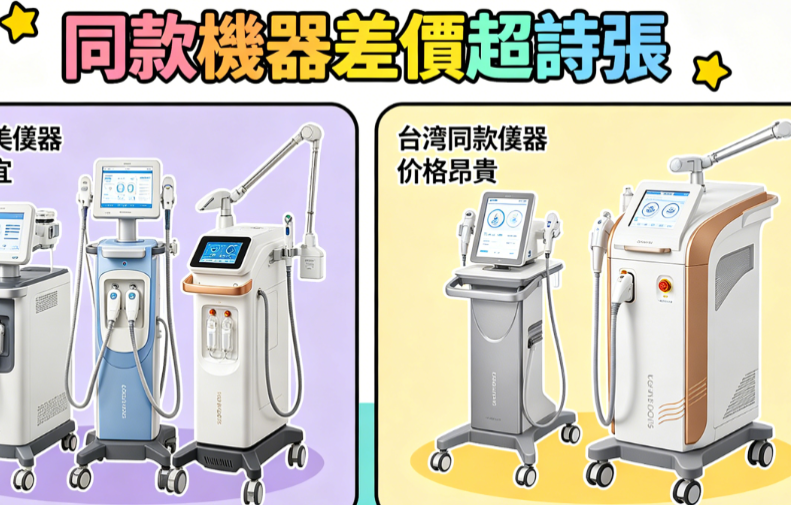
V. How much cheaper is medical beauty treatment in South Korea compared to Taiwan? Let’s do the math – who is suitable for going to South Korea for treatment, and who is better off having the procedure in Taiwan?
A low price is one thing, but whether it actually saves you money is another matter. When considering medical beauty treatments in Korea, don’t forget to add in the hidden costs such as airfare, accommodation, and translation services – only then can you get an accurate picture of the total cost.
1. Estimated hidden costs for a single medical beauty treatment in South Korea
| Expenditure items | Costs (approximately in Taiwanese dollars) | Explanation |
|---|---|---|
| Round-trip flight tickets from Taipei to Seoul | NT$5,000 to 10,000 | Low-cost airlines vs. traditional airlines: booking in advance can help reduce the cost to below 5,000 yuan. |
| Accommodation (for 2-3 nights) | NT$3,000 to 12,000 | Homestays vs. Hotels: A Wide Range of Options in the Myeongdong/Hongdae Areas |
| Food and transportation | NT$2,000 to 5,000 | The subway is very convenient, and eating out in South Korea is not particularly expensive. |
| Translation/Chinese Language Services Fees | NT$0 to 3,000 | Many clinics already offer services in Chinese, while for some, additional translation fees are required. |
| Total hidden costs | NT$10,000 to 30,000 | Consider your accommodation options and the number of days you plan to stay. |
2. Analysis of cost-effectiveness in different scenarios
Scenario A: Choosing to undergo only one treatment (such as Botox for facial slimming). In Taiwan, the cost of Botox ranges from NT$8,000 to NT$12,000, while in South Korea it is NT$1,200 to NT$1,900. This saves NT$6,200 to NT$10,100. However, if you add the cost of airfare (starting from NT$5,000) and accommodation (starting from NT$3,000), the total expense is almost equal to or even exceeds the savings. Conclusion: Choosing to undergo only one treatment and flying specifically to South Korea is not cost-effective.
Scenario B: Undertake a high-end equipment project (such as Thermage FLX). In Taiwan, the cost is NT$100,000, while in South Korea it is NT$36,000 – a direct savings of NT$64,000. Even if you add the expenses for airfare and accommodation, which amount to NT$14,000, the total cost still comes out to NT$50,000, meaning a net savings of NT$50,000. In other words, one trip can generate a profit of 50,000 – which is essentially equivalent to getting medical beauty treatments for free and even making a profit in the process.
Scenario C: Performing 2–3 treatments at once (Thermage + HIFU + Rejuran). The total cost in Taiwan is approximately NT$180,000–230,000, while in South Korea it is around NT$75,000–110,000 – a difference of over NT$100,000. After deducting the expenses for airfare and accommodation, which amount to NT$20,000, you can still save more than NT$80,000. This is undoubtedly the most cost-effective option; the more treatments you undergo, the more worthwhile the trip becomes.
3. Situations where flying to South Korea for medical aesthetics treatments is not suitable: (1) For surgical procedures that require frequent follow-up visits after treatment (such as nose augmentation or bone reduction), the accommodation costs in South Korea during the 2-4-week recovery period would outweigh any potential cost savings; (2) For treatments involving small doses of injections (such as 0.5 centum core of Filler for Lip surgery), the cost of airfare and accommodation may actually be higher than the cost of the treatment itself; (3) Consumers who are unsure about the qualifications of the clinics and cannot verify them independently should avoid low-quality clinics in South Korea that primarily serve foreign patients.
VI. How much cheaper is medical beauty treatment in South Korea compared to Taiwan? 5 important tips to avoid common pitfalls before going to South Korea
Just because something is cheap doesn’t mean you should rush into buying it without thinking. When going to South Korea for cosmetic procedures, here are five common mistakes Taiwanese people make:
1. Avoid high-priced clinics that specialize in serving foreigners. Some clinics in South Korea target tourists specifically and charge 2 to 3 times more than they do for local Koreans. How can you tell? Check if the clinic has a Korean-language website and whether the prices are listed on it. If there is only a Chinese or English website with minimal Korean content, it is likely a tourist-oriented clinic. Using comparison platforms like BeautsGO or Gangnam Unni can help you filter out such clinics and ensure that you get local market prices.
2. Make sure to check the number of treatments and the dosage to avoid any cutbacks in quality. The probes used in Thermage can only deliver a fixed number of treatments per use (such as 600 or 900 treatments), and once they are used up, they are discarded. Unscrupulous clinics might reuse probes that were not fully used by previous patients. Be sure to insist that a brand-new probe be opened in your presence, and verify that the device’s screen starts counting from 0 after each new treatment. The same applies to HIFU – make sure to check the total number of treatments set on the device’s screen before starting the treatment.
3. Make sure you understand what the “final price” includes. Some clinics list their online prices as “net prices,” but additional fees are often added on-site: anesthesia costs (₩30,000–₅0,000), sedation cream fees (₩10,000–₂0,000), service charges for foreigners (₩20,000–₅0,000), and prescription medication costs (₩10,000–₃0,000). When making an appointment, be sure to ask whether the quoted price includes taxes and anesthesia, and whether there are any additional fees. It’s a good idea to take screenshots of the responses you receive.
4. Don’t let on-site sales pitches for bundled packages trick you into making impulsive decisions. Once at the clinic, consultants might suggest things like “Adding this will save you money” or “Get 20% off if you choose three treatments today.” Do your research in advance and know exactly what you want to do; stick to your original plan. If there are any additional services that interest you, take the quotes home to compare before making a purchase on the spot.
5. Pay attention to the new tax refund policies and payment methods. Starting from 2026, the VAT refund policies of some South Korea clinics have been adjusted, and not all clinics will offer a 7-8% refund. When making payments, it is recommended to use international credit cards (Visa/Mastercard) to avoid exchange rate losses. Some clinics offer additional discounts when cash payments are made (about 5-10%), so you may want to inquire before deciding on your payment method.
VII. How much cheaper is medical beauty treatment in South Korea compared to Taiwan? FAQ – The 6 most frequently asked questions by people from Taiwan
Q1: Is the quality of cosmetic fillers in South Korea safe? What is the difference between them and Botox used in Taiwan?
A: Botulinum toxin brands in South Korea, such as Botulax, Nabota, Innotox, and Meditoxin, have all been approved by the South Korean Food and Drug Safety Agency (MFDS). Among them, Nabota (also known as Nabota) has even received approval from the US FDA under the brand name Jeuveau. Its safety level is on par with that of the internationally renowned brand Allergan Botox. The main differences lie in the range of effect and the speed of onset; however, the duration of the effects in all cases remains the same, ranging from 4 to 6 months. If you are accustomed to using imported Botox, South Korean clinics also offer Allergan Botox, and its price is still more than half cheaper than that in Taiwan.
Q2: Can I go to South Korea for cosmetic surgery if I don’t understand Korean? Will there be any communication barriers?
A: The vast majority of clinics in the Gangnam, Myeongdong, and Hongdae areas of Seoul offer Chinese-language services – not just translation apps, but consultants or clinic directors who truly speak Chinese. Especially for certified clinics listed on the BeautsGO platform, those marked as “Chinese available” can handle all consultations and treatment discussions in Chinese. It is recommended to indicate “require Chinese-language service” when making an appointment, and the clinic will arrange for a Chinese-speaking consultant to accompany you throughout the process.
Q3: Are the South Korea and Taiwan versions of the Hi-Frequency Ultrasound device the same? Are the results the same?
A: It is exactly the same machine. The Shurink/Ultraformer MPT is produced by Classys Company in South Korea. Whether the treatment is performed in South Korea or Taiwan, the hardware used is of the same model. The difference lies in the fact that machines in South Korean clinics are used more frequently (probes are replaced more often, and software updates are implemented more promptly), and South Korean doctors have more experience operating this device (due to the higher volume of treatments, they have greater proficiency in using it). There is no essential difference in the results; however, South Korean doctors may have a more precise control over the distribution of treatment pulses and energy parameters.
Q4: Can I fly back to Taiwan immediately after undergoing cosmetic surgery? How many days of recovery time are needed?
A: For non-invasive treatments such as botulinum toxin injections, Filler applications, HIFU, Thermage, or Rejuran hyaluronic acid treatments, it is safe to fly on the same day or the next day without any safety risks. After a botulinum toxin injection, there may be mild redness that subsides within 2–4 hours; after HIFU or Thermage treatment, the face may turn slightly red for 1–3 hours; after Rejuran treatment, there may be temporary pinprick marks and slight swelling that last for 6–12 hours. It is recommended to schedule your flight for the day after the treatment for greater convenience, but flying on the same day is also possible (as long as you avoid getting the treated area wet for 4 hours after the procedure).
Q5: Is there a significant difference in the effects between South Korea’s Hafei 1000-shot and 300-shot ultrasound treatments? What is recommended for beginners?
A: The differences in results are quite obvious. 300 sessions are only suitable for targeted areas such as the lower jawline or the Nasolabial Fold Correction; 600 sessions constitute a standard full-face tightening treatment, while 1000 sessions provide a comprehensive solution that includes the entire face, neck, and Double Chin. For beginners with limited budgets, it is recommended to start with 600 sessions – the effects of a tightened facial contour can be seen immediately. If you already have significant sagging or a Double Chin, going straight for 1000 sessions plus neck treatment offers the best value for money (the savings can even cover the cost of your flight).
Q6: If problems arise during cosmetic surgery in South Korea, is it possible to seek help back in Taiwan?
A: Non-invasive treatments such as botulinum toxin, Hyluronic Acid Filler, Thermage, Rejuran, etc. are considered low-risk procedures with extremely low chances of postoperative complications. If you experience any discomfort after returning to Taiwan (such as delayed redness or allergic reactions), dermatology clinics in Taiwan can handle them perfectly. It is recommended to obtain a treatment record from the clinic in South Korea, including details about the brand, batch number, dosage, and injection site of the products used. This record can be provided to Taiwanese physicians for reference if necessary. Choosing an accredited clinic on the BeautsGO platform provides an additional layer of assurance—these clinics offer comprehensive Chinese-language follow-up services via LINE or WeChat, and will actively contact you on the 3rd and 7th days after the treatment.
VIII. How much cheaper is medical beauty treatment in South Korea compared to Taiwan? In summary: One table can help you decide who should go and who shouldn’t.
Finally, here is a table to help you quickly determine whether your situation is suitable for flying specifically to South Korea for medical beauty treatments.
| Your situation | Recommendation | Degree of cost savings |
|---|---|---|
| Only perform one minor procedure (botulinum toxin/injection of Filler in specific areas). | ❌ It is not recommended to fly just for this purpose. | If you spend all the price difference on air tickets, accommodation, and meals, you might end up losing money. |
| Implement a high-end equipment project (Thermage/Haifu, 1,000 units in total). | ✅ Well worth the effort | Save a substantial amount of NT$30,000 to $50,000. |
| Perform 2-3 treatments at a time (Thermage + HIFU + Rejuran). | ✅✅ Super Value | Save a whopping NT$80,000+ – that’s practically like getting a free trip abroad! |
| Surgical procedures (Double eyelid surgery/nose augmentation/face lifting) | ⚠️ It is necessary to assess the duration of stay. | The surgery costs are reduced by 20-40%, but the accommodation expenses for 2-4 weeks still need to be taken into account. |
| South Korea already has tourism plans in place; visitors can take the opportunity to undergo cosmetic procedures while there. | ✅✅✅ Perfect | Flight tickets and accommodation costs are inevitable anyway, so the money saved from medical beauty treatments is truly pure savings. |
| Not familiar with the South Korea market, so I don’t know how to compare prices or verify information. | ⚠️ First, use BeautsGO to get started with your tasks. | Avoid falling into the overpricing traps of tourist clinics |
Key conclusion: The fact that medical aesthetics treatments in South Korea are cheaper than those in Taiwan is not just a marketing tactic, but a structural reality – the combination of origin benefits, fierce competition among thousands of clinics, scale economies, and exchange rate advantages makes South Korea the leader in terms of cost-effectiveness in Asia. If the total budget for your treatment plans in Taiwan exceeds NT$50,000, flying to South Korea and covering the expenses for flights and accommodation is still cost-effective. If you undergo 2-3 treatments at once, the savings will be enough to cover a free trip to Seoul. The crucial things to do are: use the right tools for price comparisons, choose the right clinic, and do your homework thoroughly. On BeautsGO, you can find real-time prices for over 200 certified clinics. By comparing prices before you travel, you’ll be sure that every penny you spend is well invested.